
Cap me
When: uncapped and no reading taken for 180 s.
Two buzzes, a beep, the screen says 'Cap me'.
One handheld meter, a family of sensor nodes for the tent, probes that live in the pot and a camera that takes the same picture every day. They all twist together the same way, they all talk to each other, and every number they take is saved with its unit, its time, its place and how long ago it was calibrated. The pH probe has a cap you can't lose and a meter that tells you to put it back on.
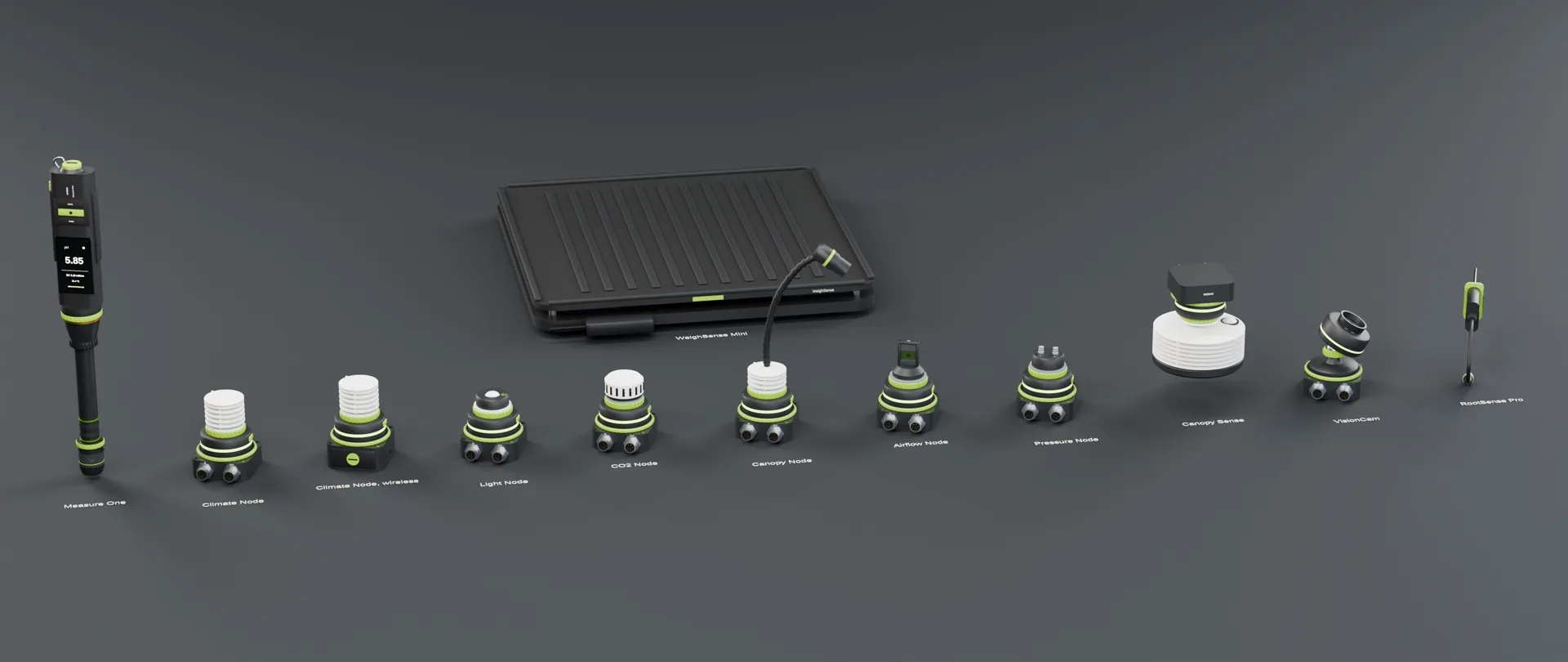 3D render · the Measure family
Concept renders made from the design files, not product photos. Every number on this page is a design target Designed or worked from one Modelled. Jardin has been prototyped for years; the production parts are built once tooling starts.
Nothing in the range is a sealed box. A head twists onto a brain and a brain twists onto a dock, each with a green quarter-turn collar that clicks. When a sensor wears out you replace the head, or only its tip, and keep everything else.
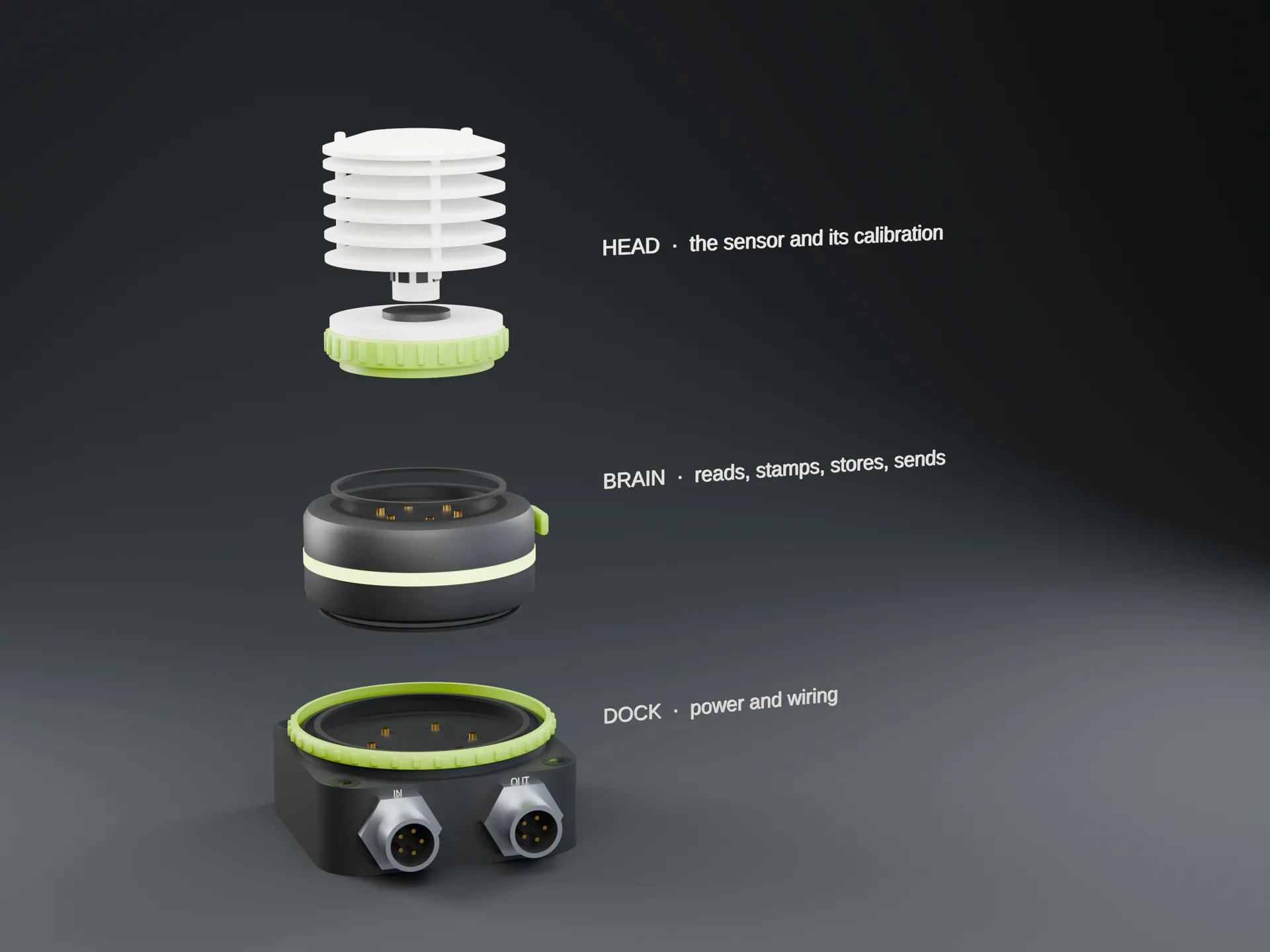 3D render · Climate Node, apart
Each head has its own small processor that knows what it is, what it measures and when it was last calibrated. Move a head to another brain and its calibration goes with it.
The Measure Puck is a 52 mm disc for the tent; Measure One is the same brain with a display, for your hand. Either one reads any head, stamps the time and place on the reading and keeps it.
A 60 × 60 mm plate that stays where you mounted it. The Bus Dock takes one cable for power and data. The Battery Dock takes two AA lithium cells and no cable at all.
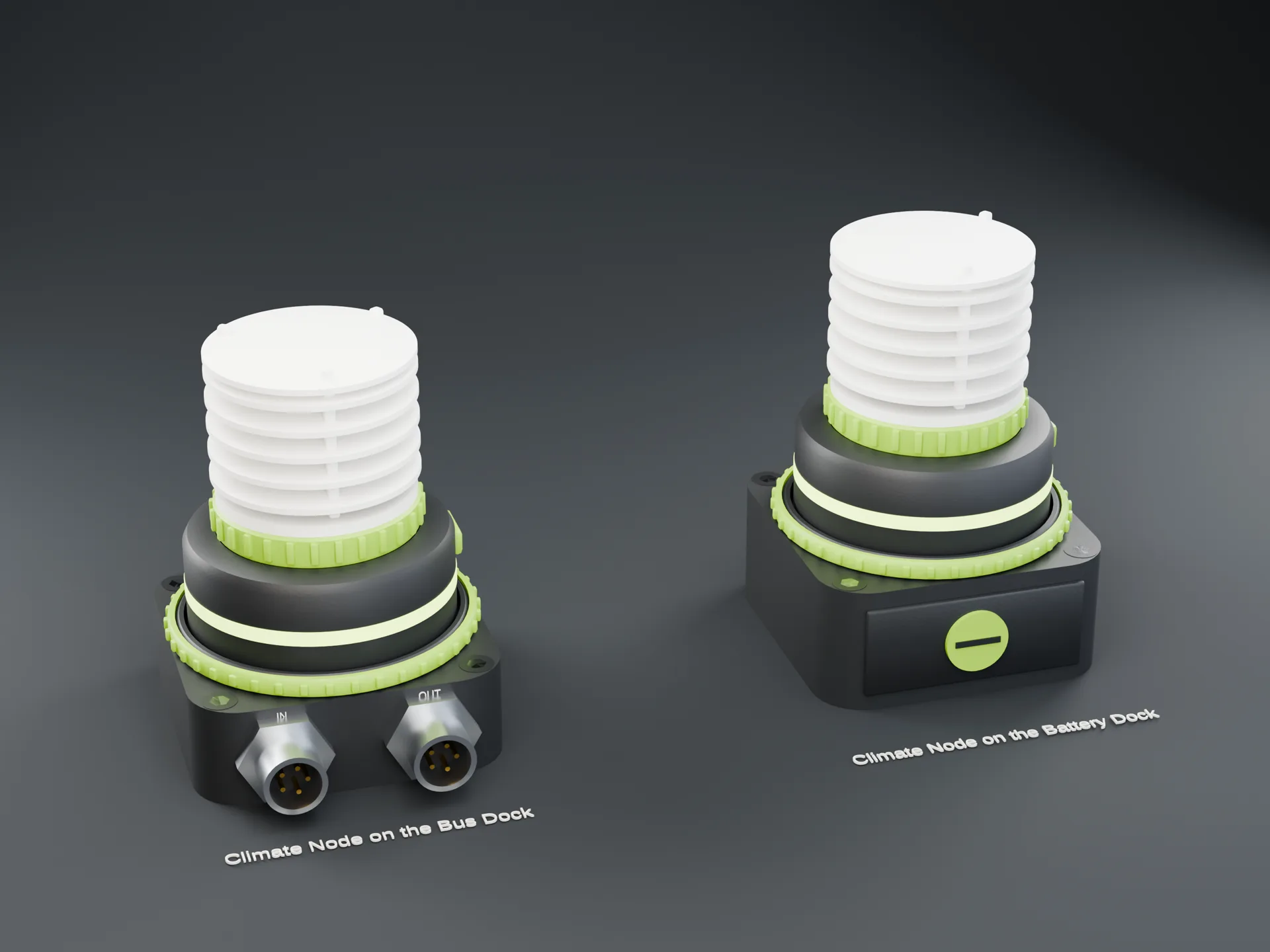 3D render · Bus Dock and Battery Dock
Three bases and ten heads make thirty pairings, and every one is drawn. Drag the picture to turn the device right round. Two pairings are refused, and the page shows them apart and tells you why.
Power figures are arithmetic from design-target currents Modelled, not measurements. The pictures are 24-frame turntables rendered from the design files.
A pH electrode dies when its glass dries out, and it dries out because somebody put the cap down and walked off. So the cap is tied to the probe, a magnet tells the meter whether it's on, and the meter checks every few hours that there is still storage solution inside.
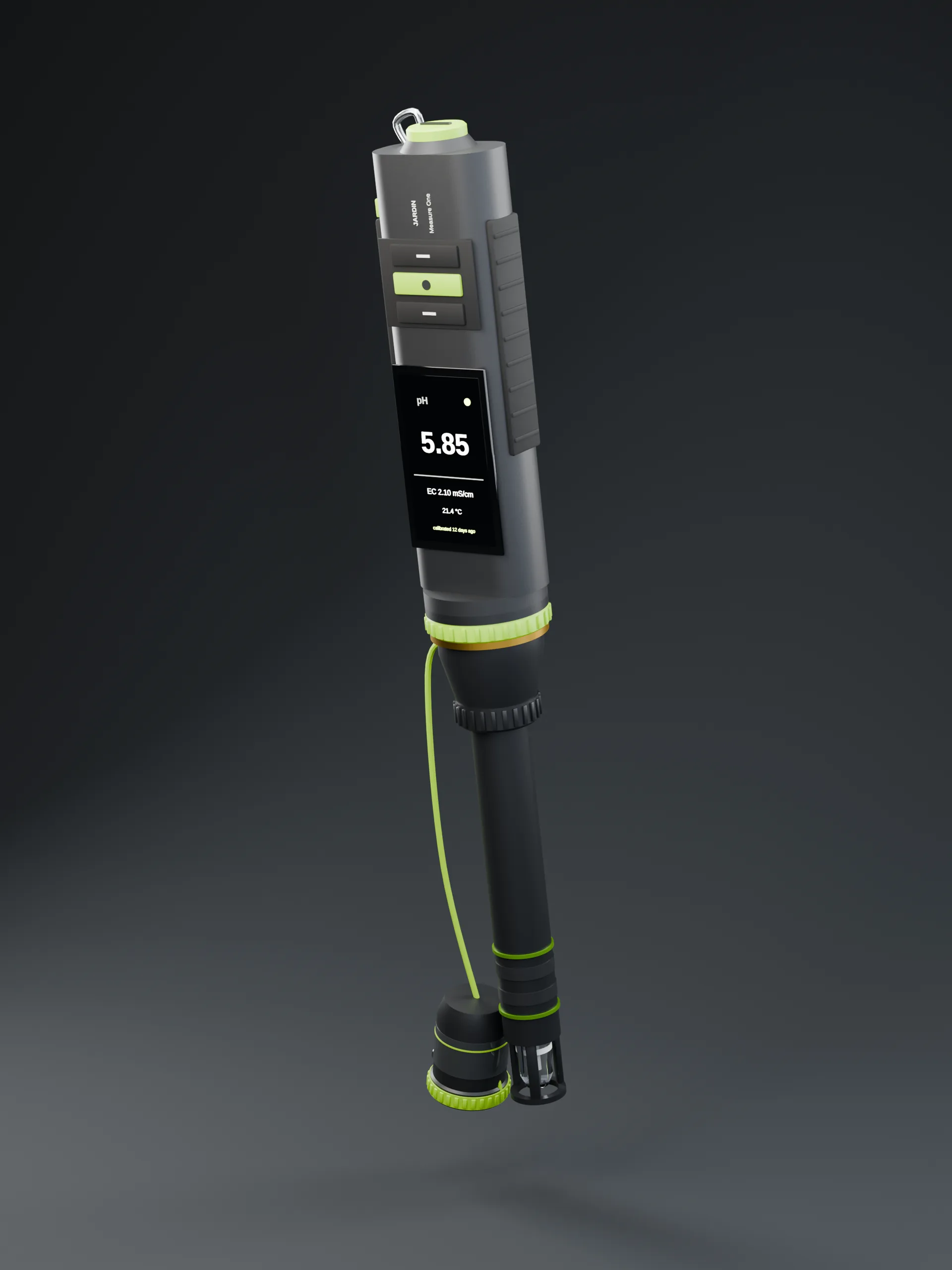
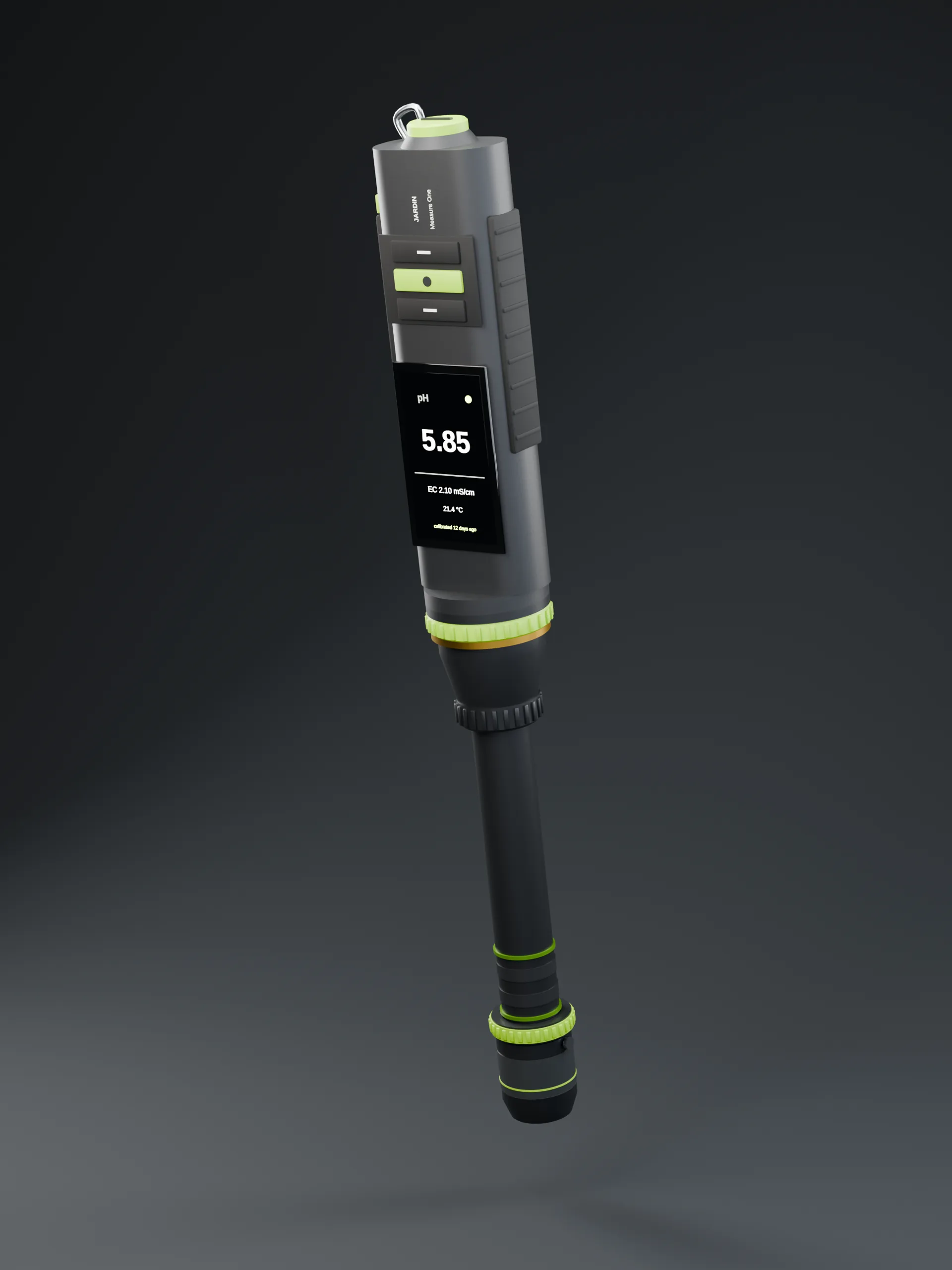
A demo of the designed behaviour, not firmware. The timings are settings; these are the defaults.
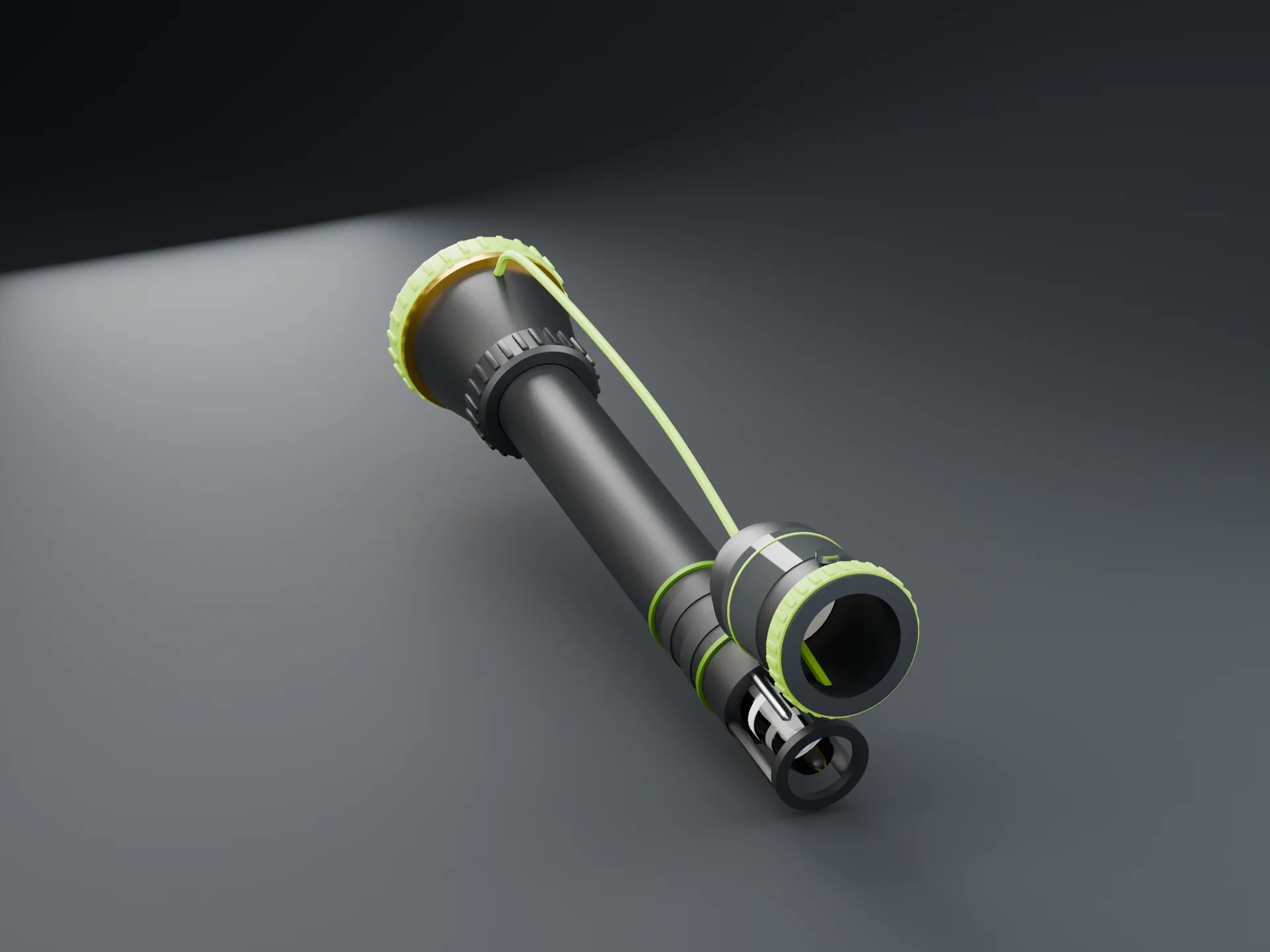 3D render · Liquid Duo head and KeepWet cap
Storage is pH electrode storage solution (3 M potassium chloride). Never plain or RO water.
When: uncapped and no reading taken for 180 s.
Two buzzes, a beep, the screen says 'Cap me'.
When: still uncapped after 600 s.
Push notification from the Jardin app: 'Your pH probe is out of its cap'.
When: a reading is saved.
The screen walks two ticks: Rinse, then Cap. The second tick fills itself when the cap clicks on.
When: the wet check reads dry.
Push notification and a red drop on the screen: 'Add ten drops of storage solution'; one tap reorders the bottle.
When: 30 days or 60 readings since calibration, whichever first.
Amber dot beside pH and EC; readings are still taken and flagged cal_due.
When: 60 days since calibration.
Readings flagged cal_overdue; automatic dosing will not act on them.
When: slope under 90 % or over 105 %, offset beyond ±30 mV, or settling slower than 60 s, at calibration.
'This electrode is wearing out': reorder link, and how many weeks the last ones lasted.
When: uncapped for more than 24 h.
A guided revival: soak two hours in storage solution, then calibrate. The app says honestly when it did not work.
The pH electrode is a standard 12 mm part that unscrews by hand, so a worn one is an electrode swap, not a new meter. Design life is 12 to 18 months with the cap kept wet Designed.
Weeks after harvest, the question is what that plant lived through. So every device in the range saves the same kind of record, and saves all of it.
Each device writes the reading to its own memory before it tries to send it. A Puck holds 60,000 of them and Measure One 500,000, so a dropped connection loses nothing.
The record lives on the Jardin hub in your home. It works with the internet off.
Sending a grow to the Bay, to a Bay Trial or to anyone else is a switch you turn on, per grow, and can turn off again.
A reading the device has doubts about is kept and flagged, never quietly dropped or smoothed. Automatic dosing refuses to act on a reading whose calibration is overdue.
Each of these is an assembly of the same docks, brains and heads. Buy one, add another later, move a head from one to the next.
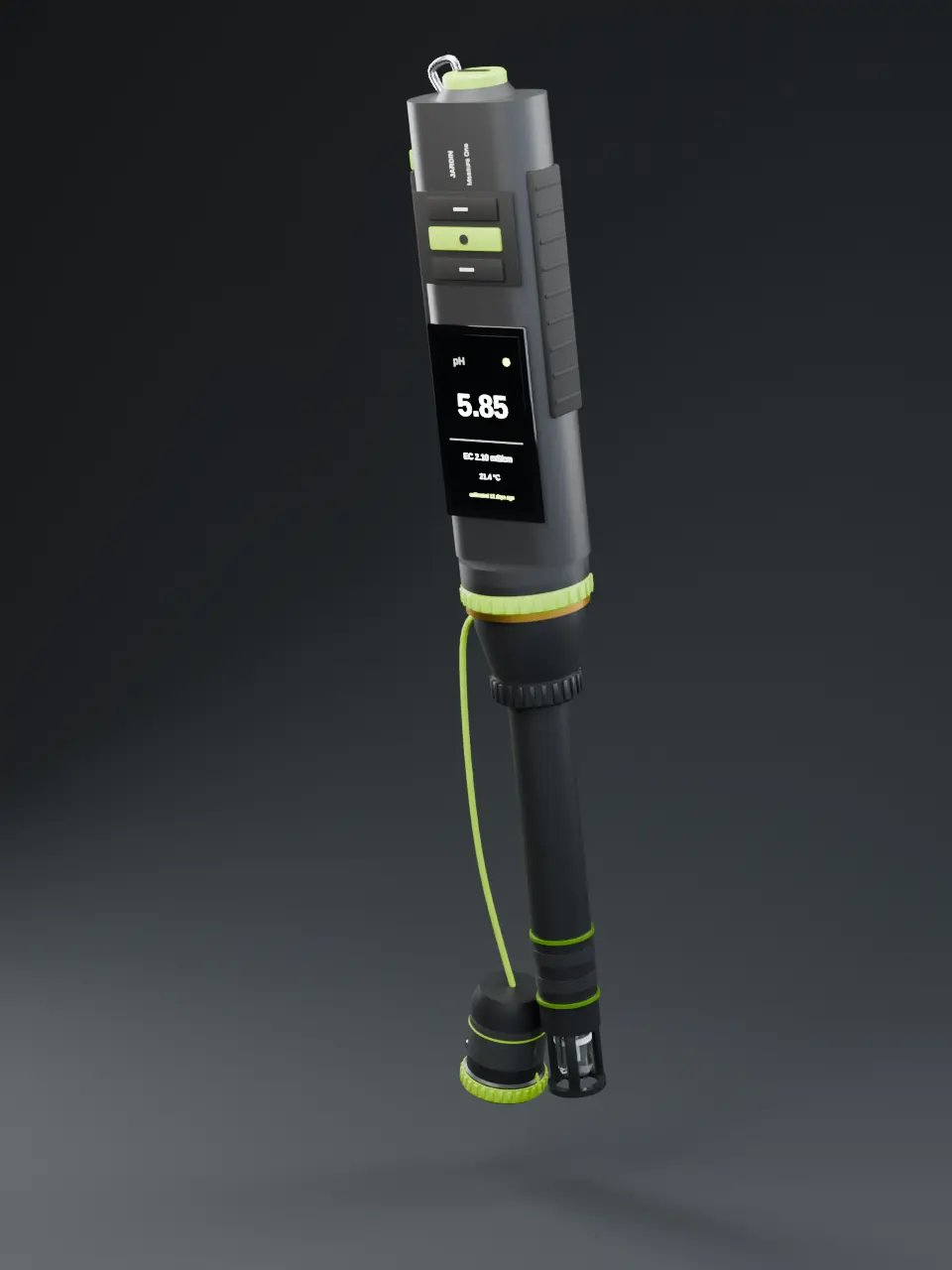
The pH and EC meter that reminds you to cap it.
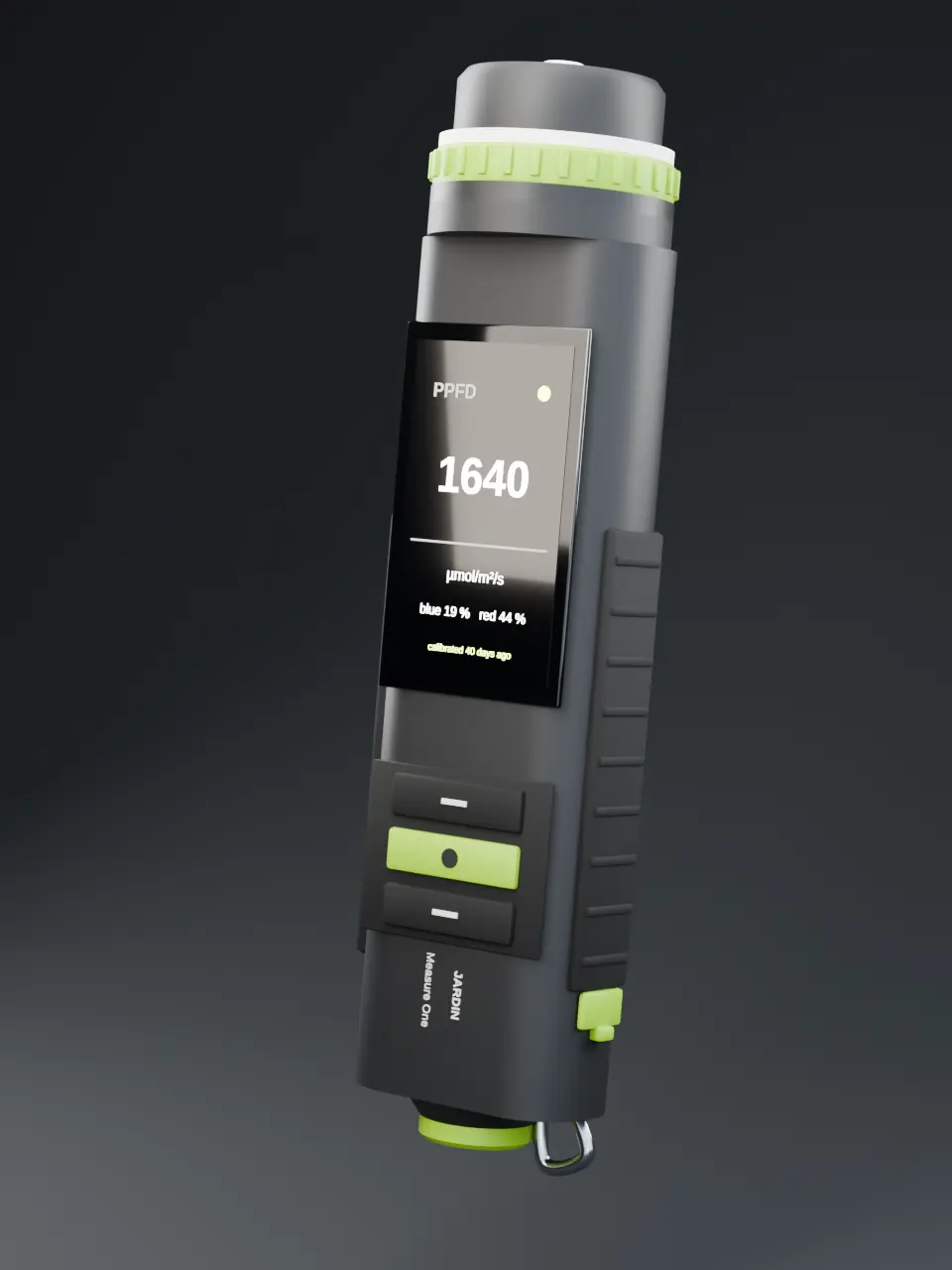
PPFD and light bands in the hand; walks a grid and draws the canopy map.
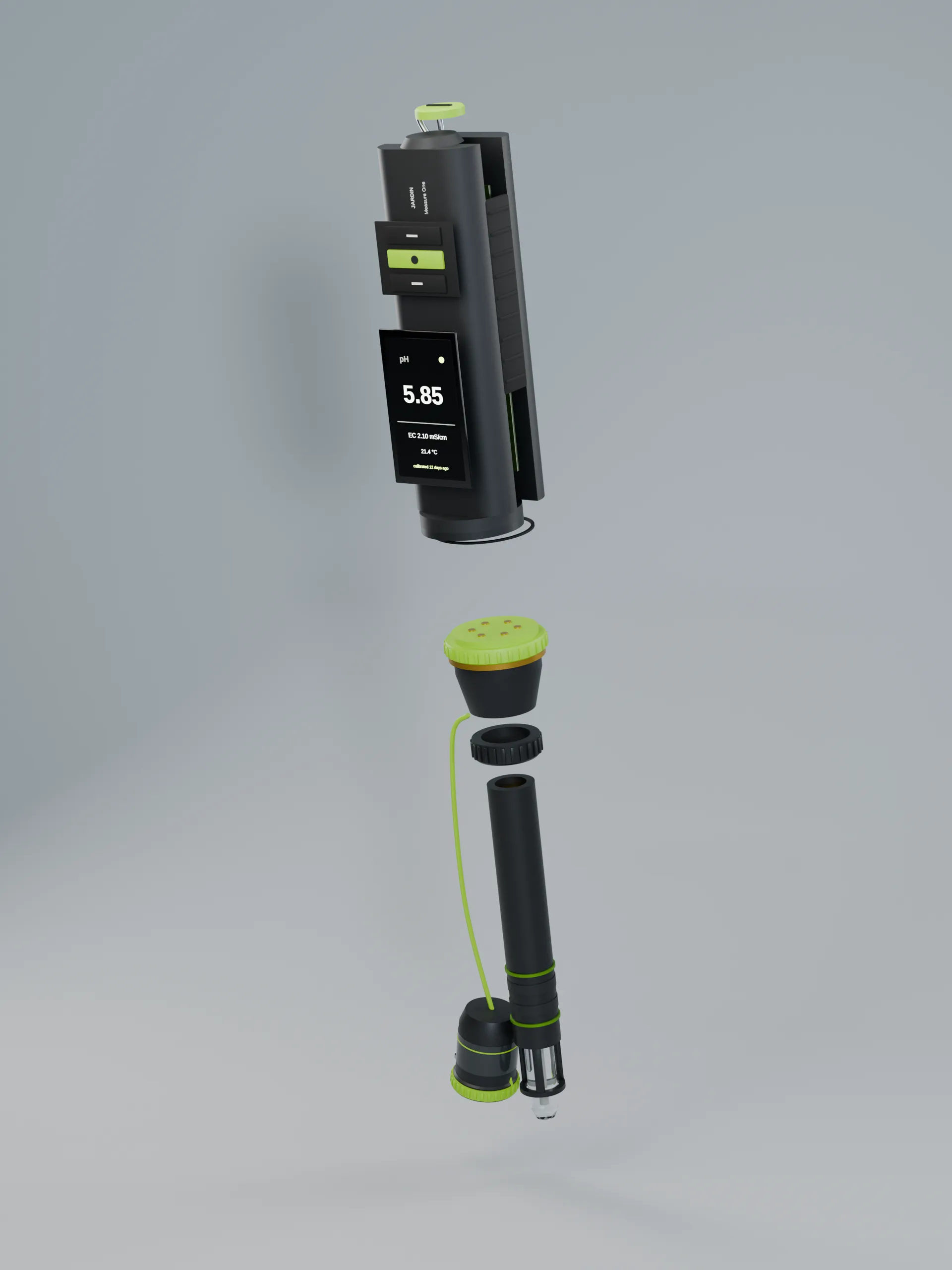
The body, the head, the electrode and the cap all come apart by hand. The cell is behind a coin-turn door.
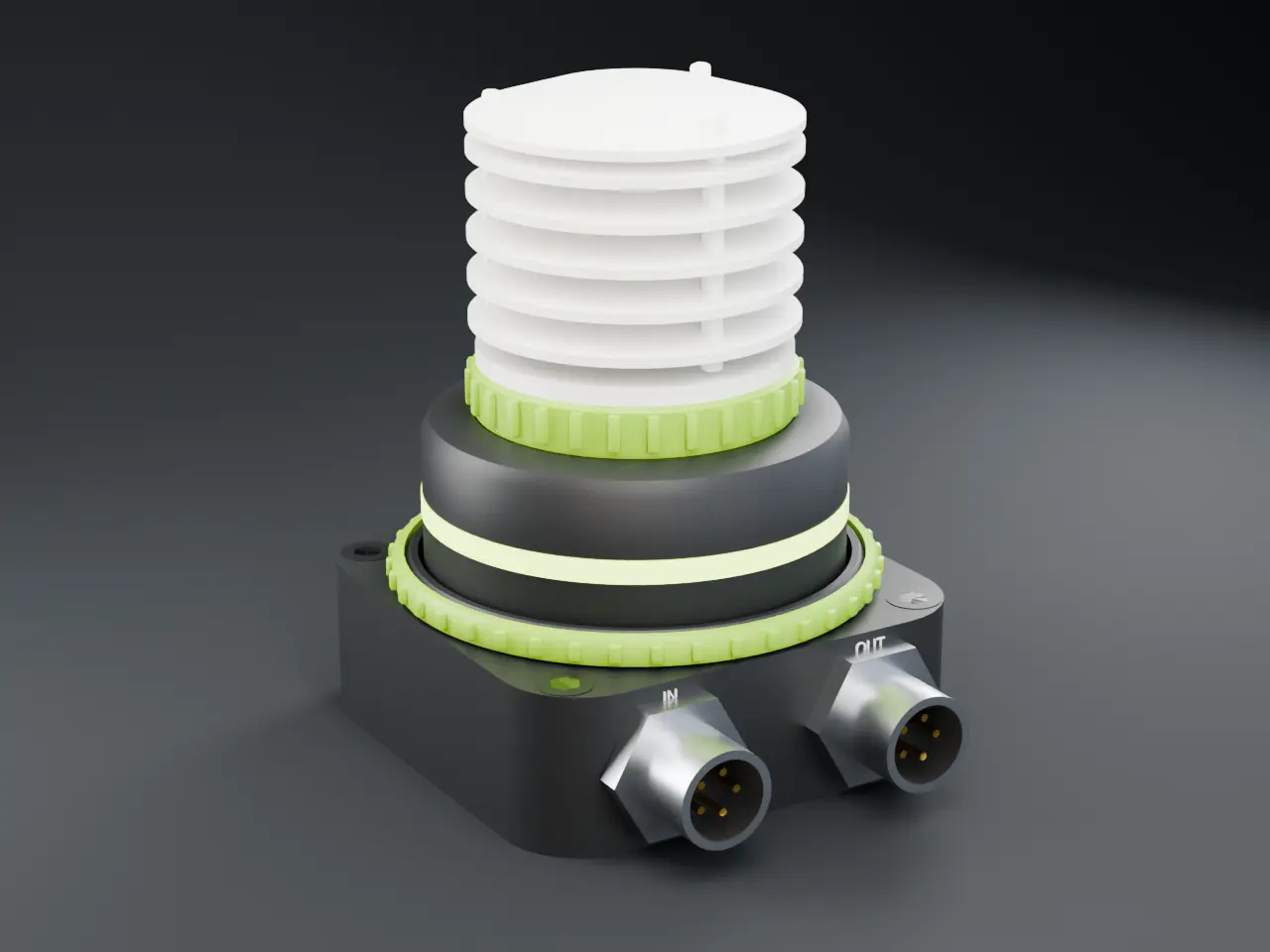
Temperature, humidity, dew point and VPD at one named place.
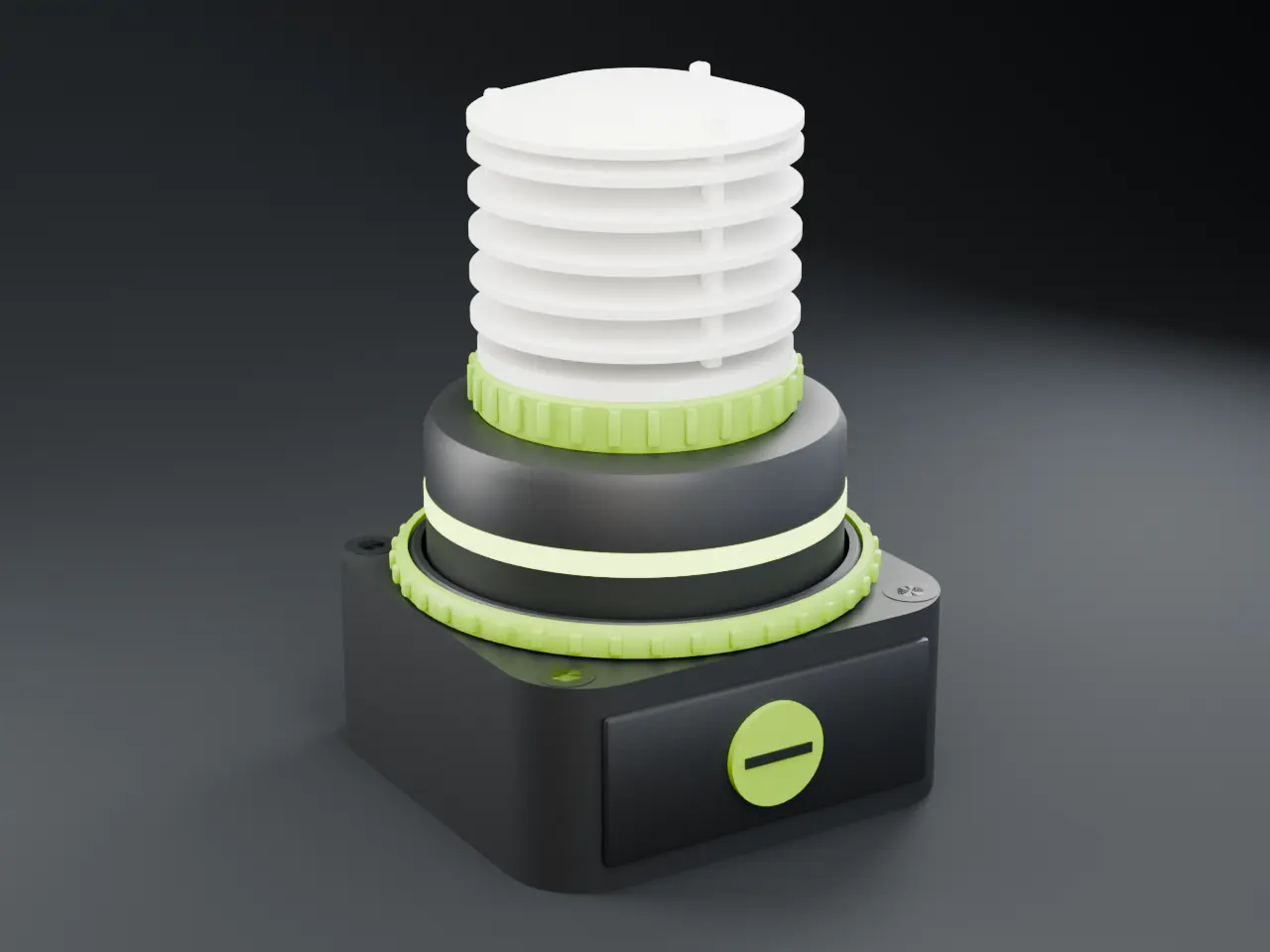
The same, on two AA cells, where a cable is a nuisance.
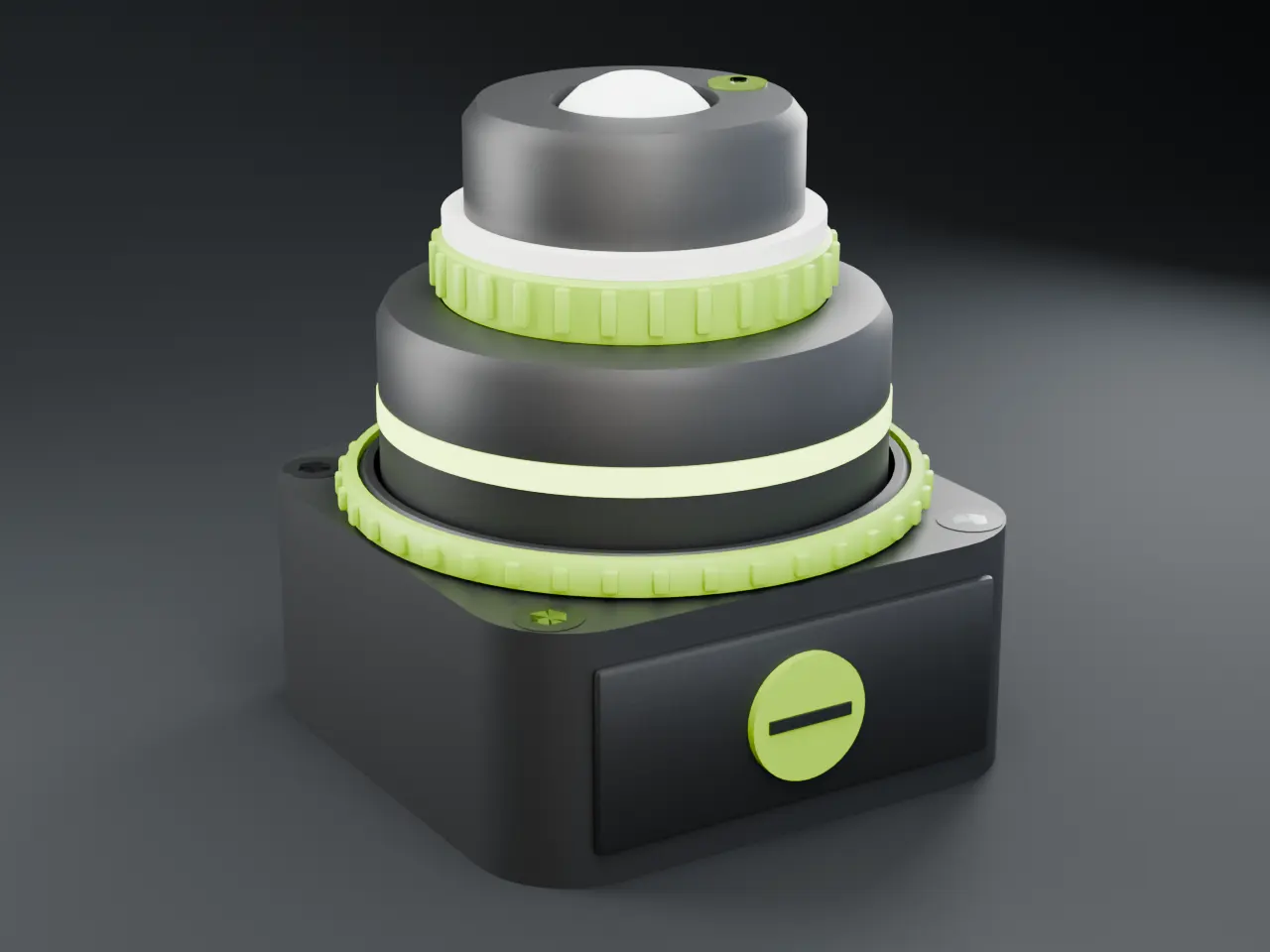
The same on cells: scatter four or six for a live canopy map.
True CO2 at the canopy or the intake.
Leaf temperature, leaf-to-air difference and leaf VPD.
Air speed where the plants are.
Tent negative pressure and carbon filter loading.
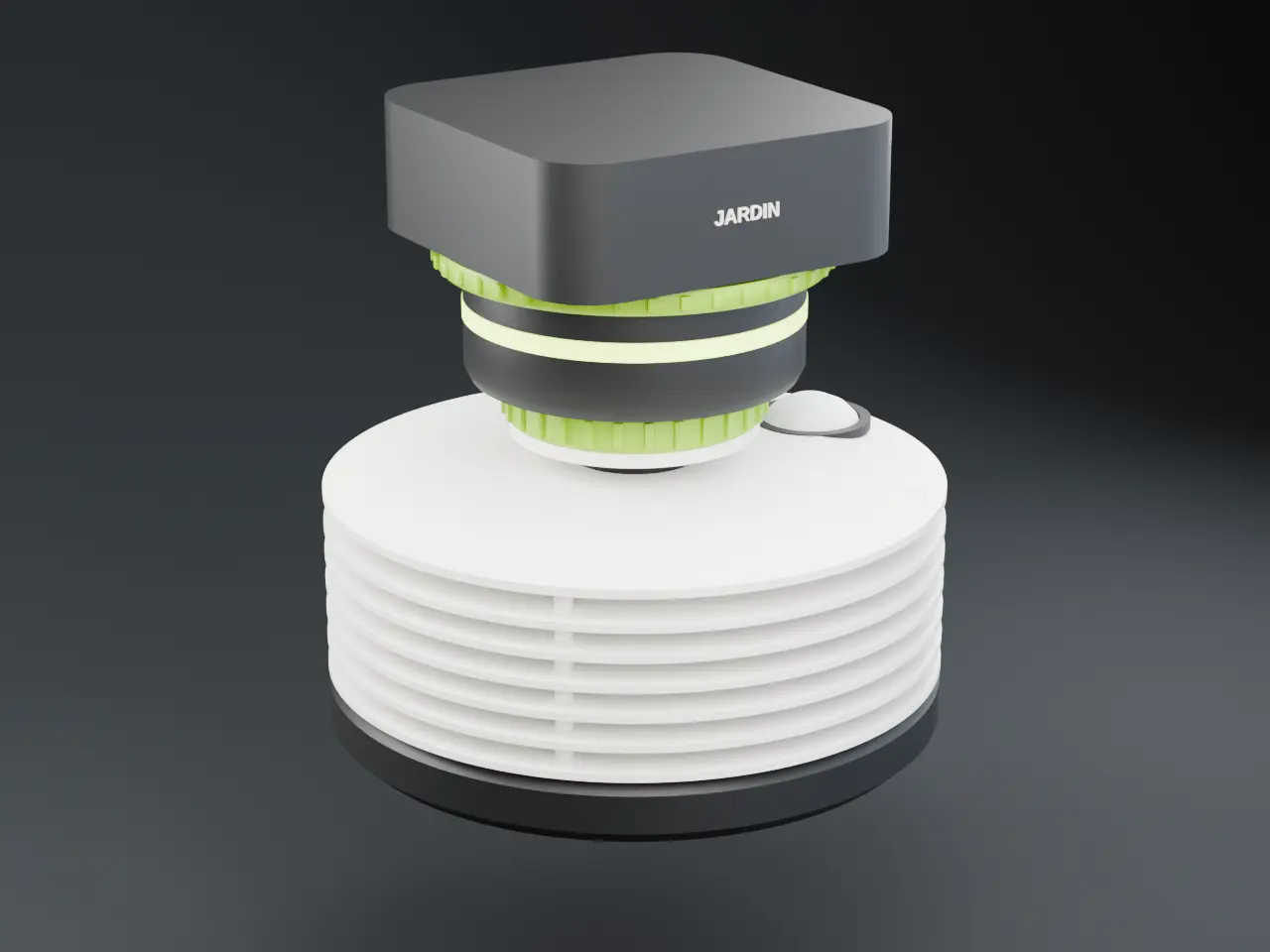
Everything the canopy feels, in one hanging body. The part WaterWorks' Air CO2 already depends on.
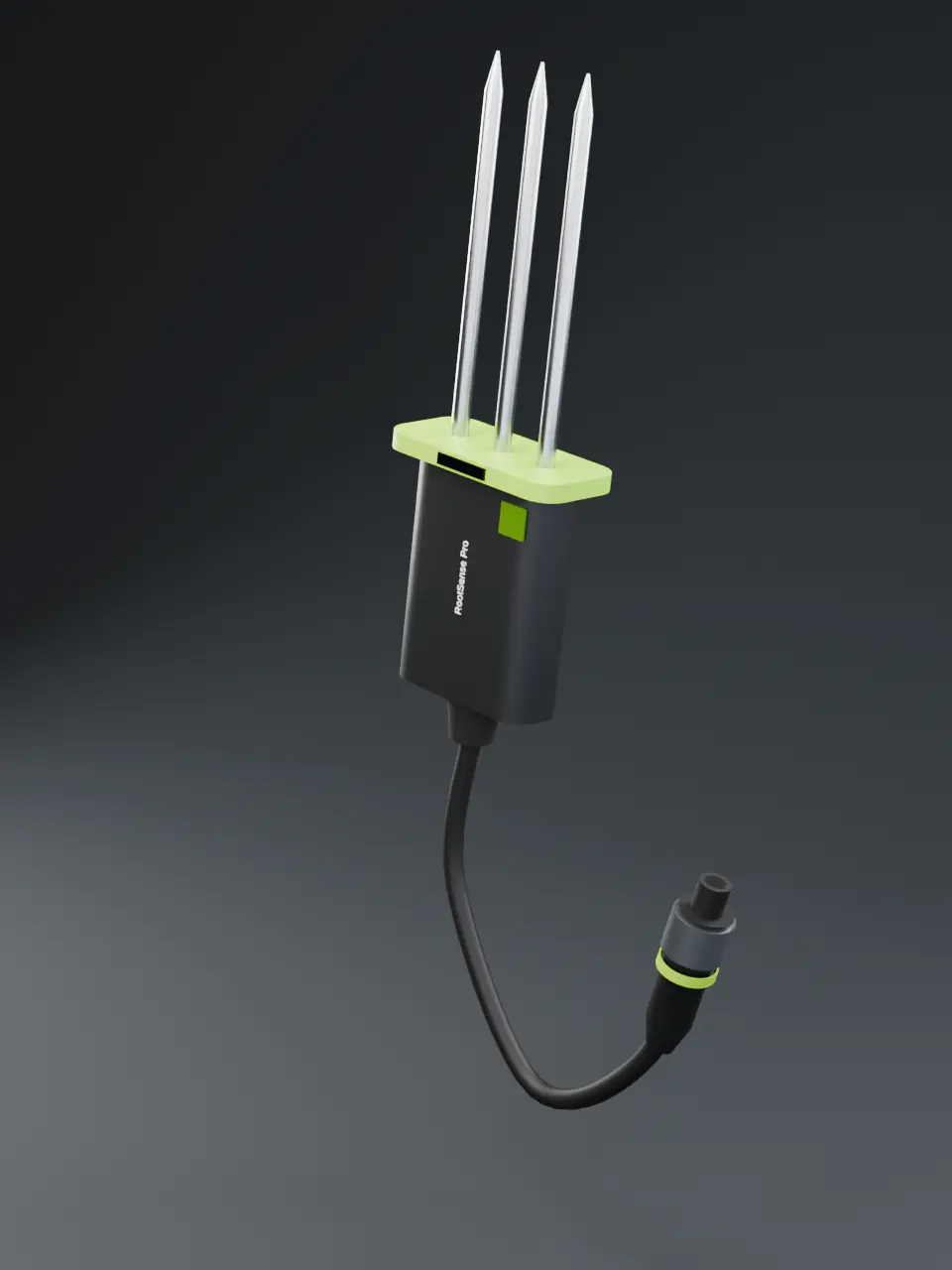
Stays in the pot. Reads water content at a frequency where salt disturbs it least, with temperature and bulk EC.
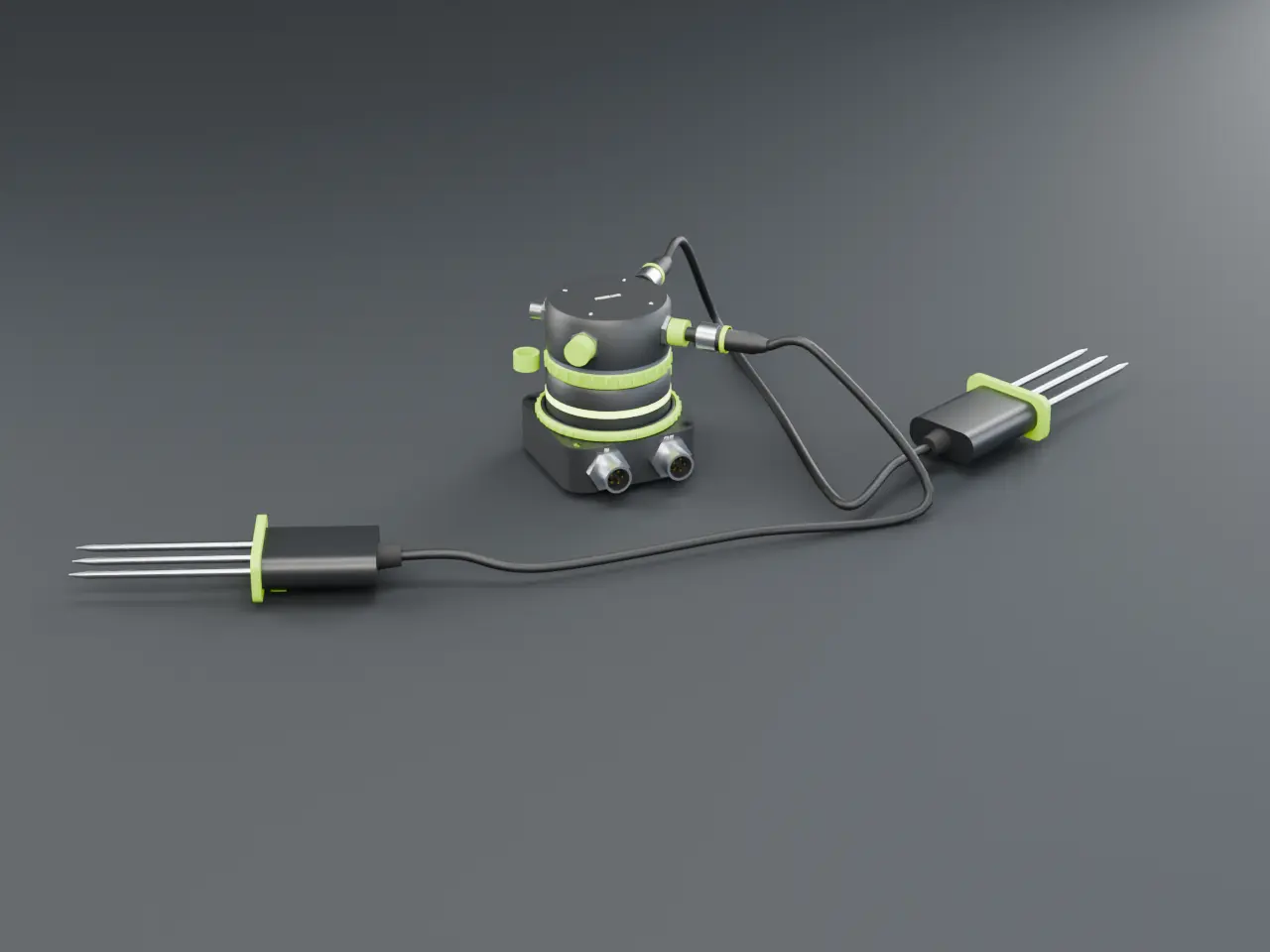
Water content, temperature and bulk EC in two pots, two ports free.
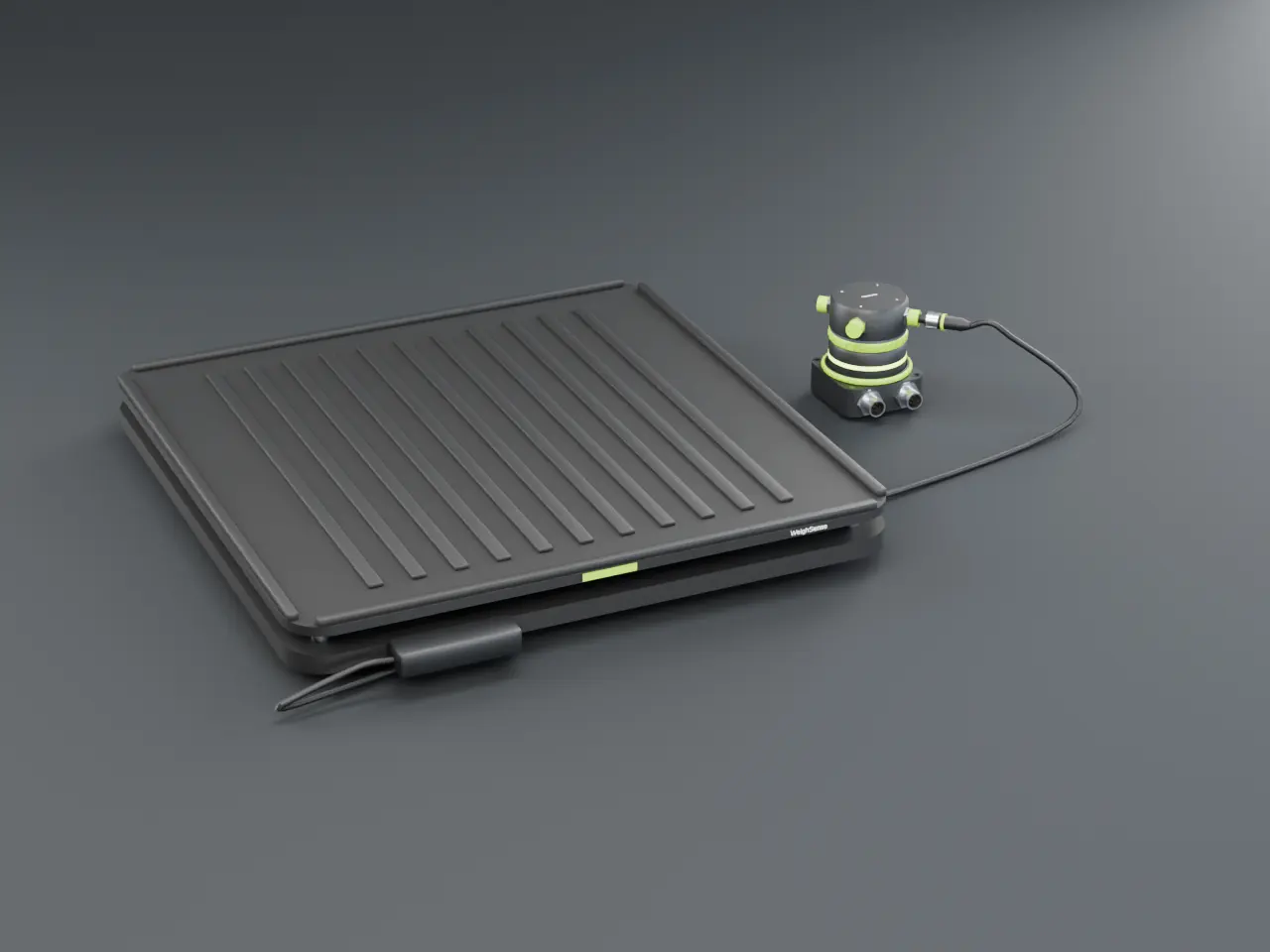
Pot weight: water in, water out, and the plant in between.
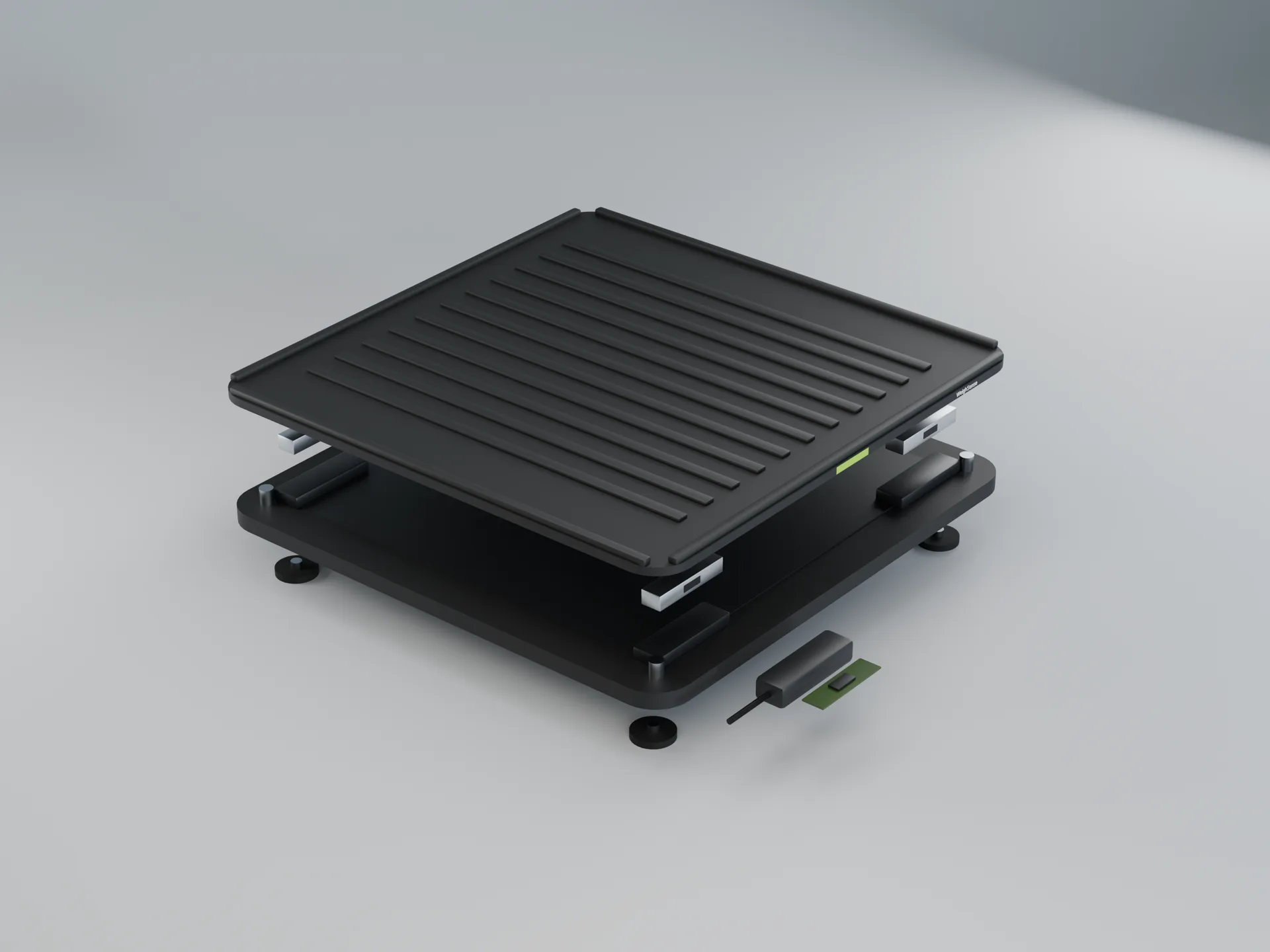
Four load cells between a ribbed deck and a base with overload stops, so it also knows when a pot leans on the wall.
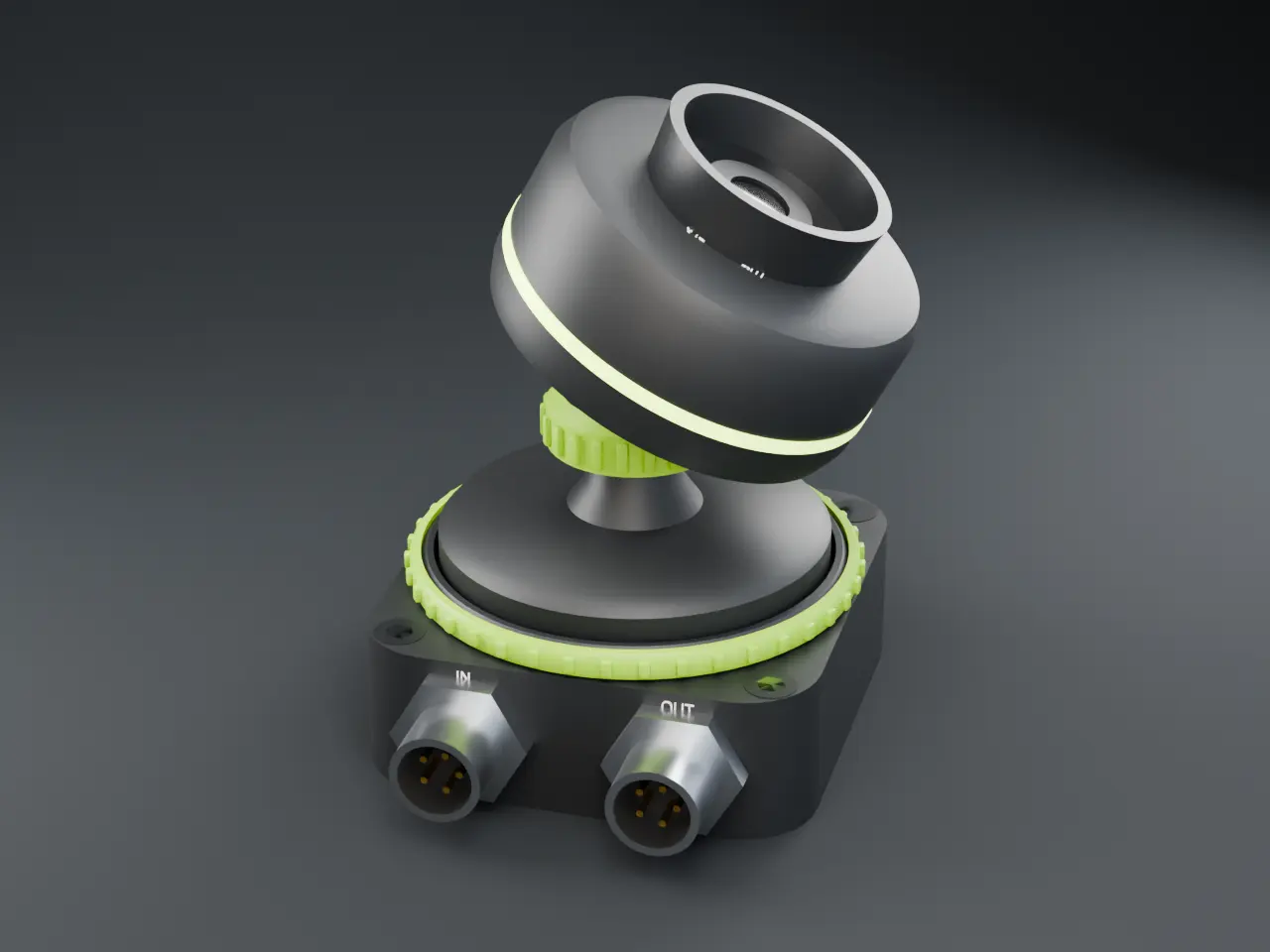
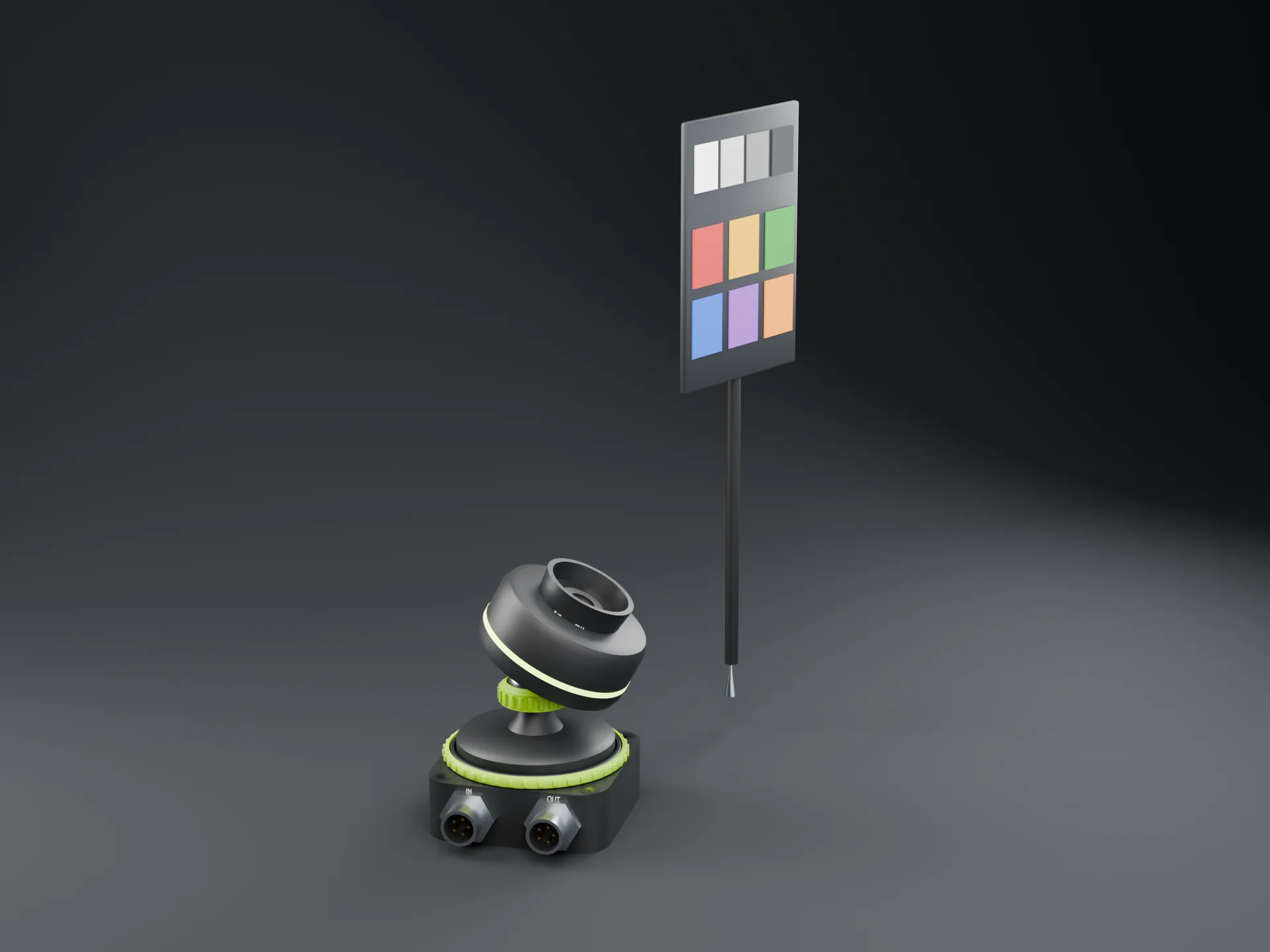
A fixed 5 MP autofocus camera that takes the same picture at the same point in the light cycle every day, with a reference tile in frame, and files each image against the plant and that hour's readings.
Battery life and bus power are worked from design-target currents Modelled. Sizes and ratings are design targets Designed. Drag any picture marked 360° to turn it round.
A head announces itself when it clicks on: what it is, what it measures, in what units, and when it was last calibrated. A new kind of head works with the brain you already own.
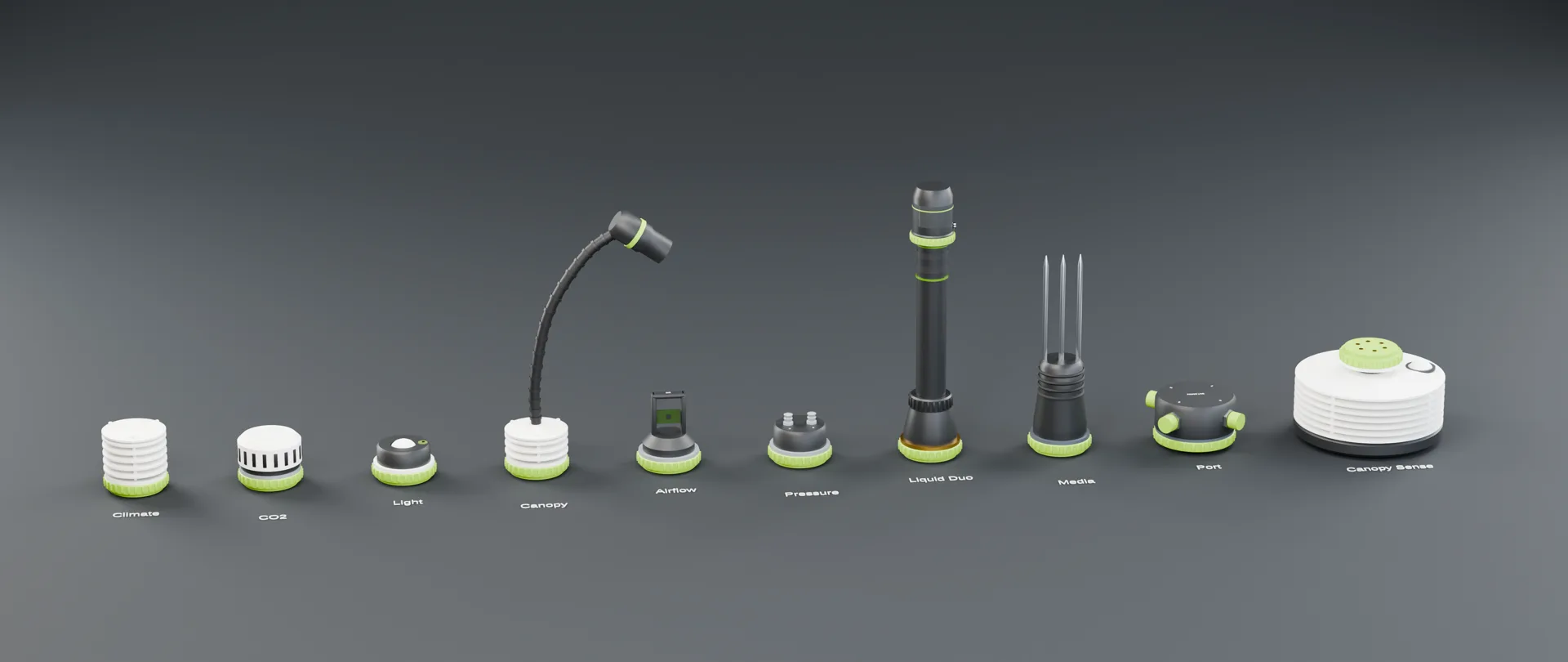 3D render · the ten heads
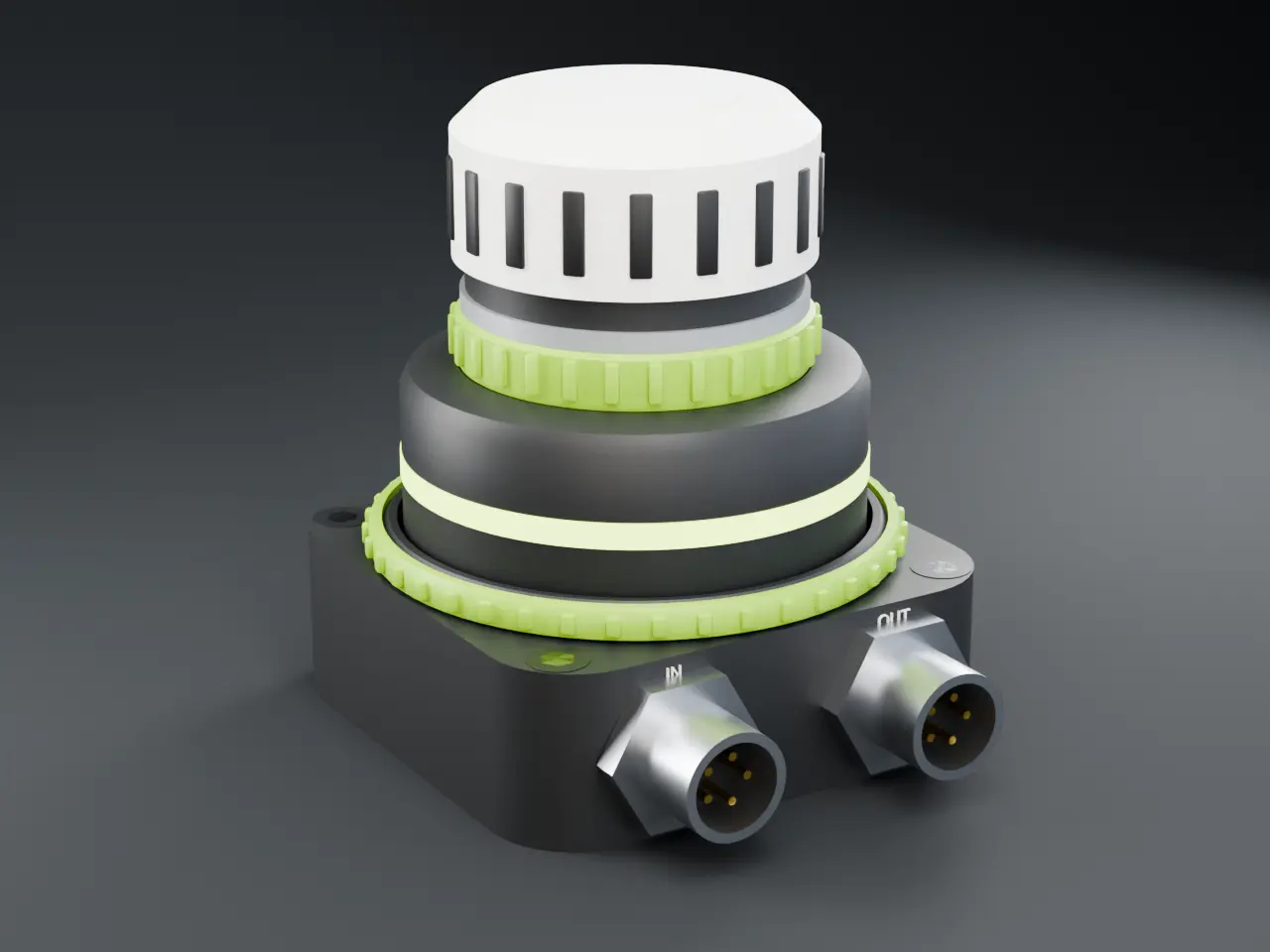
Temperature and humidity behind white radiation-shield louvres, so it reads air and not lamp. The sensor sits on a plug-in tip and carries its own factory membrane.
Air temperature, relative humidity, dew point, air VPD and 1 more
Wear part: RH tip. 24 months in a tent.
True CO2 by photoacoustic NDIR behind a splash membrane. For control and for the record; the Air Guard room monitor stays the safety device.
CO2, air temperature, relative humidity
Wear part: Splash membrane. 12 months.
A cosine-corrected PTFE dome over a 14-channel spectral sensor. PPFD, the blue, green, red and far-red split, DLI, the real photoperiod and driver flicker. A bubble level in the rim; a canopy stake and a hang clip in the box.
PPFD, extended PPFD, daily light integral, light bands: blue and 2 more
Wear part: Diffuser dome. Replace when scratched or stained; the head is then recalibrated.
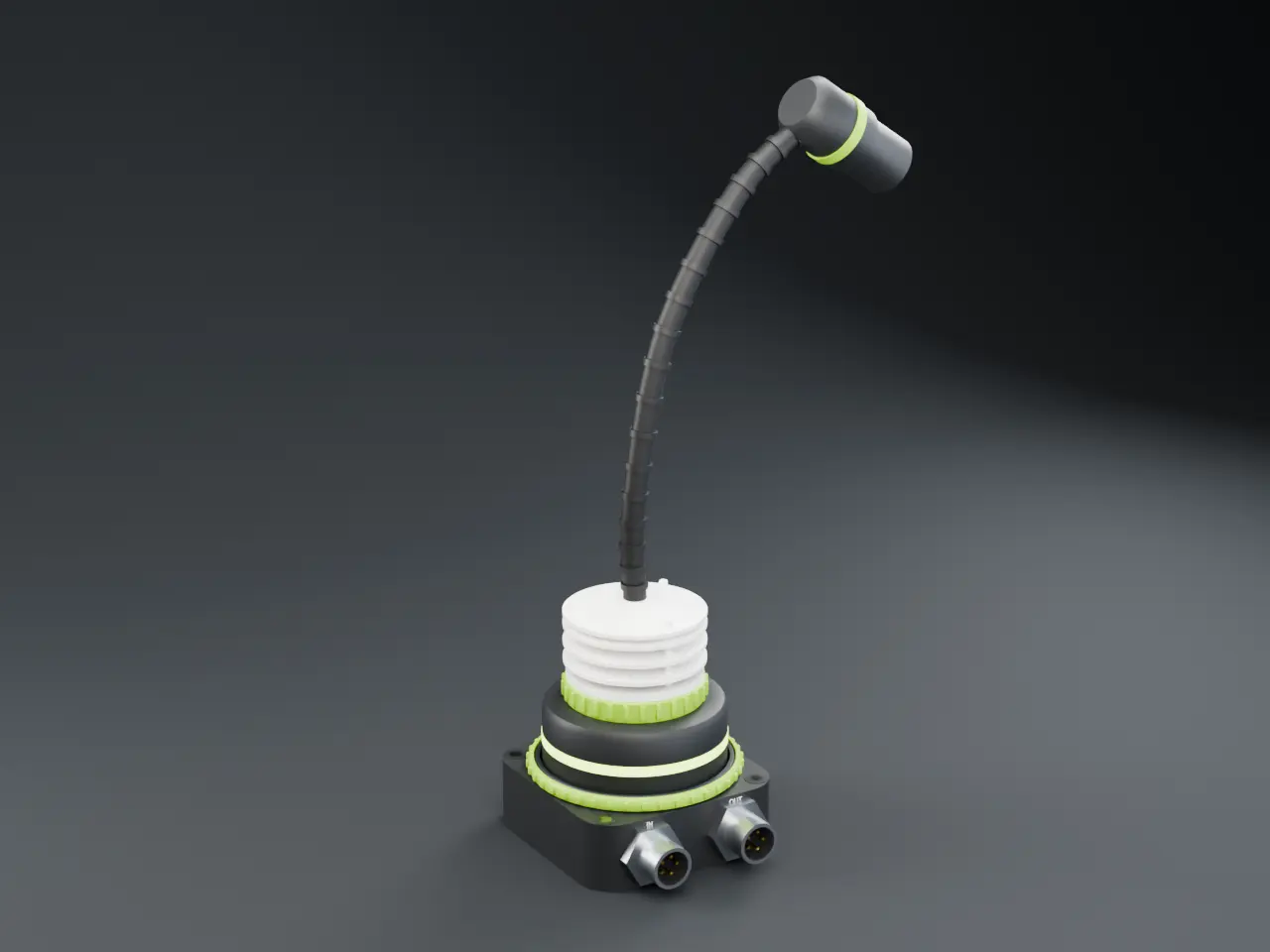
An infrared eye on a 150 mm gooseneck, aimed at one leaf, with air temperature and humidity beside it. Gives leaf temperature, leaf-to-air difference and leaf VPD.
Leaf temperature, air temperature, relative humidity, air VPD and 1 more
Wear part: RH tip. 24 months in a tent.
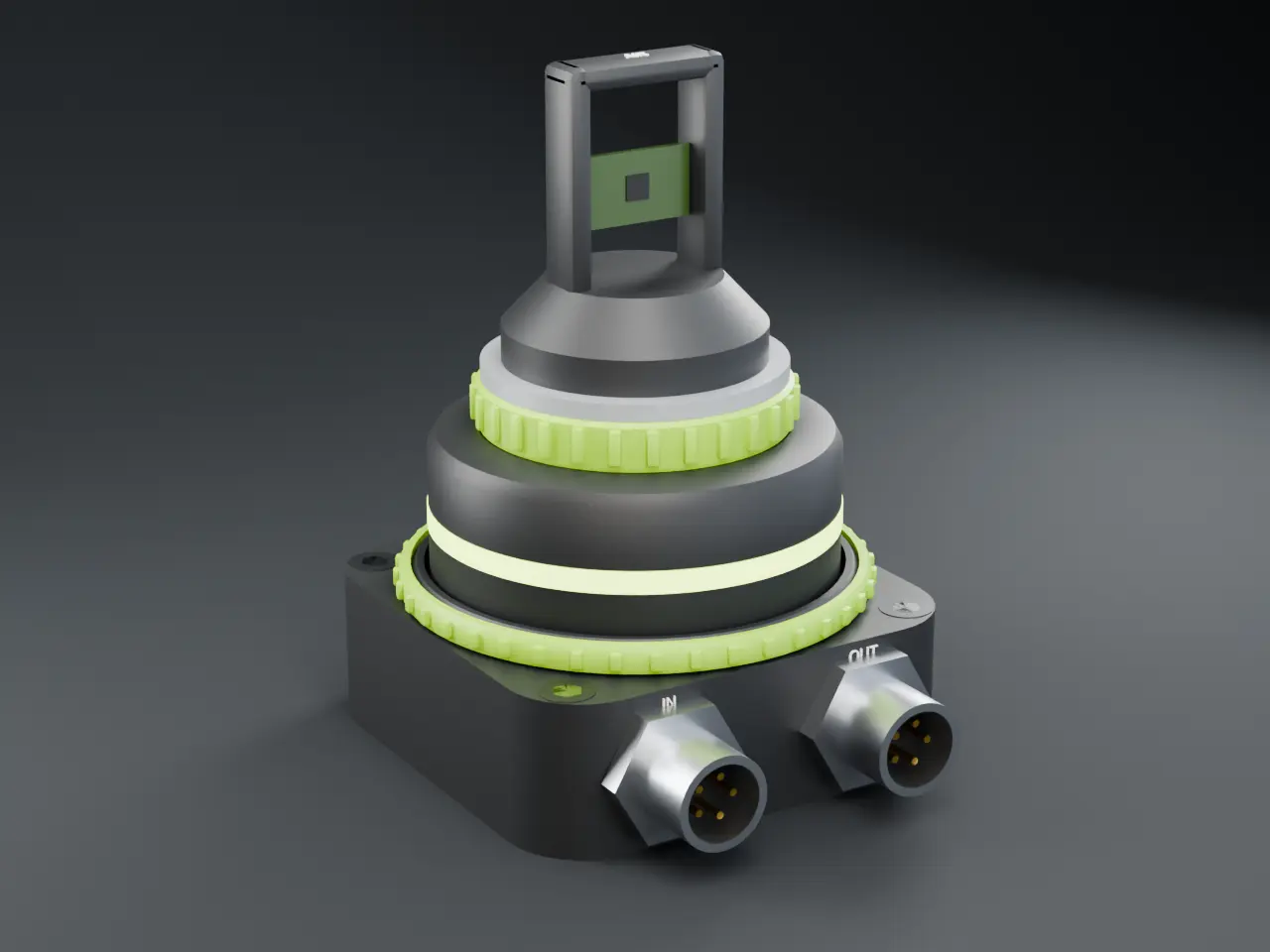
A thermal air-speed sensor in an open bridge, for finding dead air and fans that blast one branch. Turn the bridge across the airflow.
Air speed, air temperature
Wear part: Bridge guard. Replace if bent.
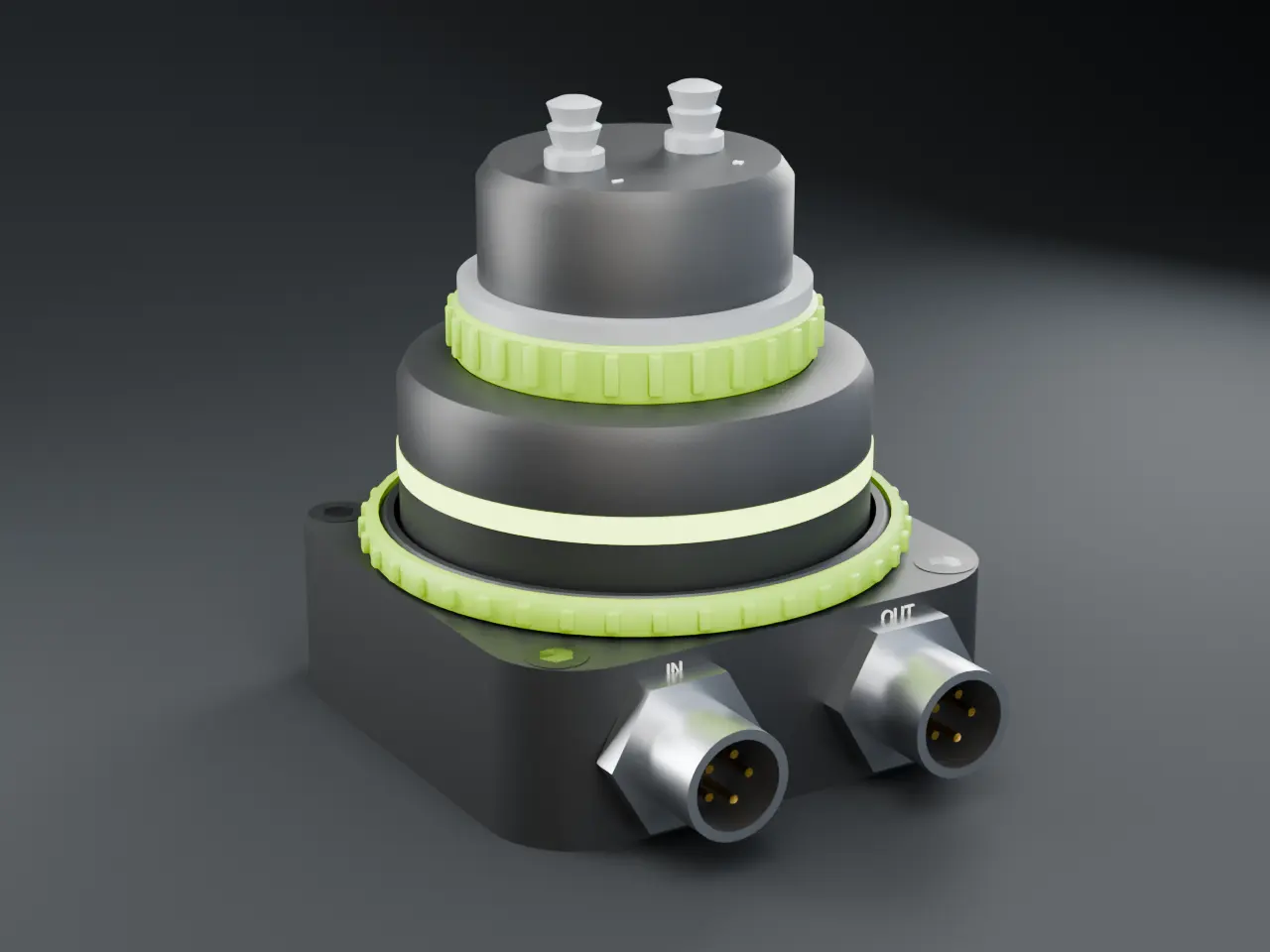
Tent against room, or across the carbon filter: two 4 mm tube barbs. Tells you the tent is under negative pressure and when the filter is loading up.
Differential pressure
Wear part: Tube set, 2 x 2 m, with wall grommet. Replace if kinked.
pH, EC and temperature on one 150 mm stem under one KeepWet cap. The pH electrode is a standard 12 mm S7 electrode that unscrews by hand; the EC cell and the electronics stay.
pH, electrical conductivity at 25 °C, solution temperature
Wear part: pH electrode, double junction, gel, S7. 12 to 18 months with the cap kept wet.
Three stainless tines on a handle, for spot checks pot by pot with Measure One: water content, temperature and bulk EC, tagged to the pot you scan.
Volumetric water content, substrate temperature, bulk EC of the medium, pore-water EC
Wear part: Tine set. Replace if bent.
Four Probe Line sockets on one head. One Puck reads four pots, or two pots and two weigh platforms.
4 probe sockets
Wear part: Port blanking cap. Replace if lost.
The Canopy Sense that WaterWorks already hangs at canopy height (JA-CS-01), now a head on the same Puck: louvred temperature and humidity, CO2, leaf infrared and light in one 96 mm body.
Air temperature, relative humidity, dew point, air VPD and 10 more
Wear part: RH tip. 24 months in a tent.
One set for a 4 x 4 tent: the canopy centre, both edges, under the leaves, the intake, the root zone, the filter and the reservoir. Hover a number to find it.
Hung over the middle plant: temperature, humidity, CO2, leaf temperature and light in one body.
What the air is like coming in, before the plants change it.
Under the leaves, where humidity collects and mould starts.
One at each edge of the canopy, so you see how much light the corners lose.
The second of the pair.
Two RootSense Pro probes in two pots, with two sockets free.
Across the carbon filter: shows the tent is under negative pressure and when the filter is loading up.
The same picture every day.
pH and EC at the reservoir, then parked on a pole by its magnet.
The five devices on the tent's bus draw 2.19 W together, worked from design-target currents Modelled; three more run on cells and Measure One on its own. A drawing of where things go; a render of the kit inside a tent is still to come.
Six choices in the drawings, and the reason for each.
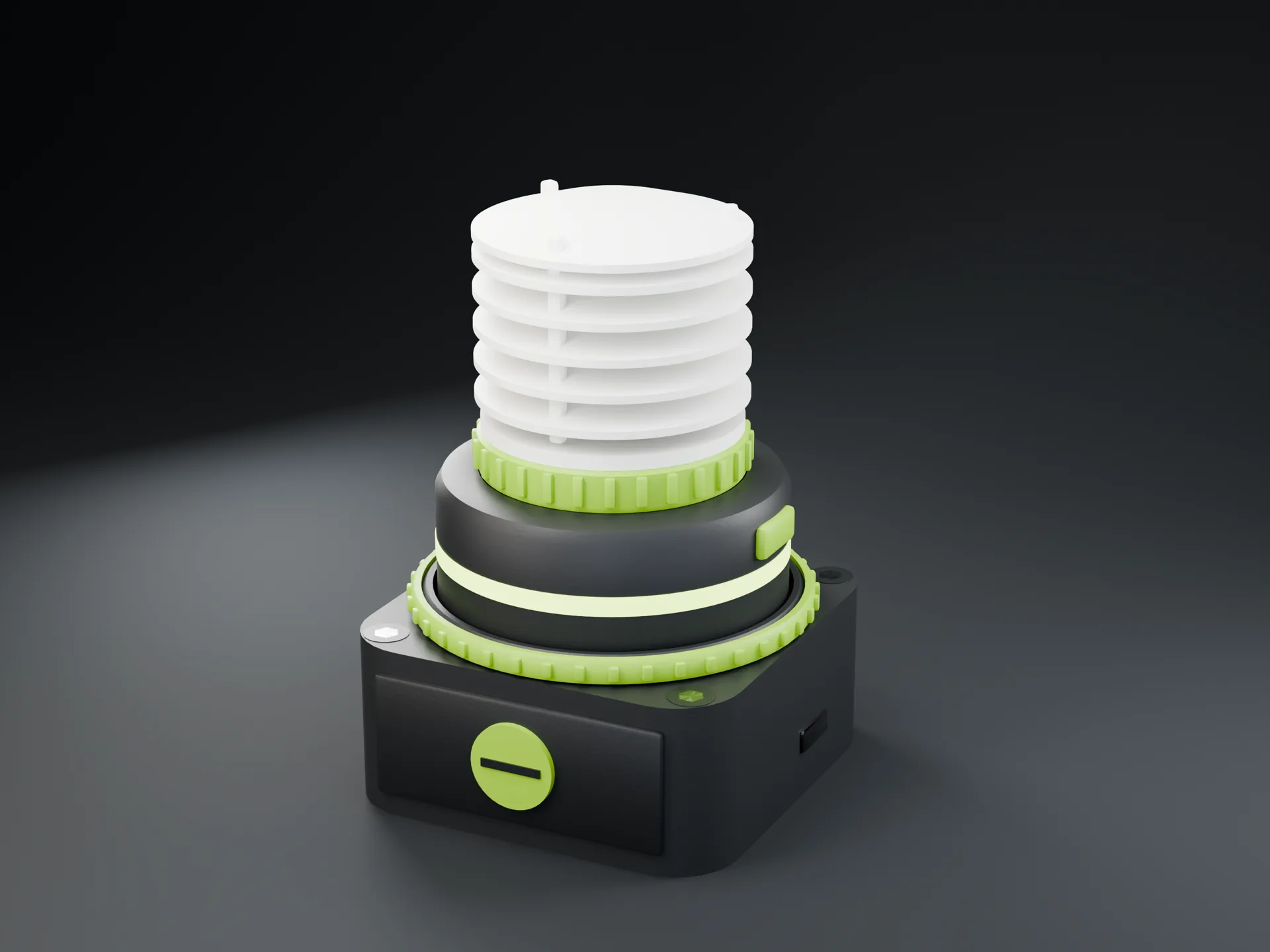
Every light ring switches off for the tent's dark period, and the camera has no flash and no lamp. A status light is not worth a light leak in flower.
The calibration lives in the head, not the brain. Swap a head between two brains and both readings stay true; add a new kind of head and the old brain reads it.
The pH electrode unscrews. The humidity sensor is a plug-in tip. The light dome, the splash membrane and the tines are each a part number. The thing that wears out is never the thing that costs the most.
Everything runs from the 24 V Jardin Core bus, from two AA cells or from its own rechargeable cell. Nothing in the range switches or carries mains.
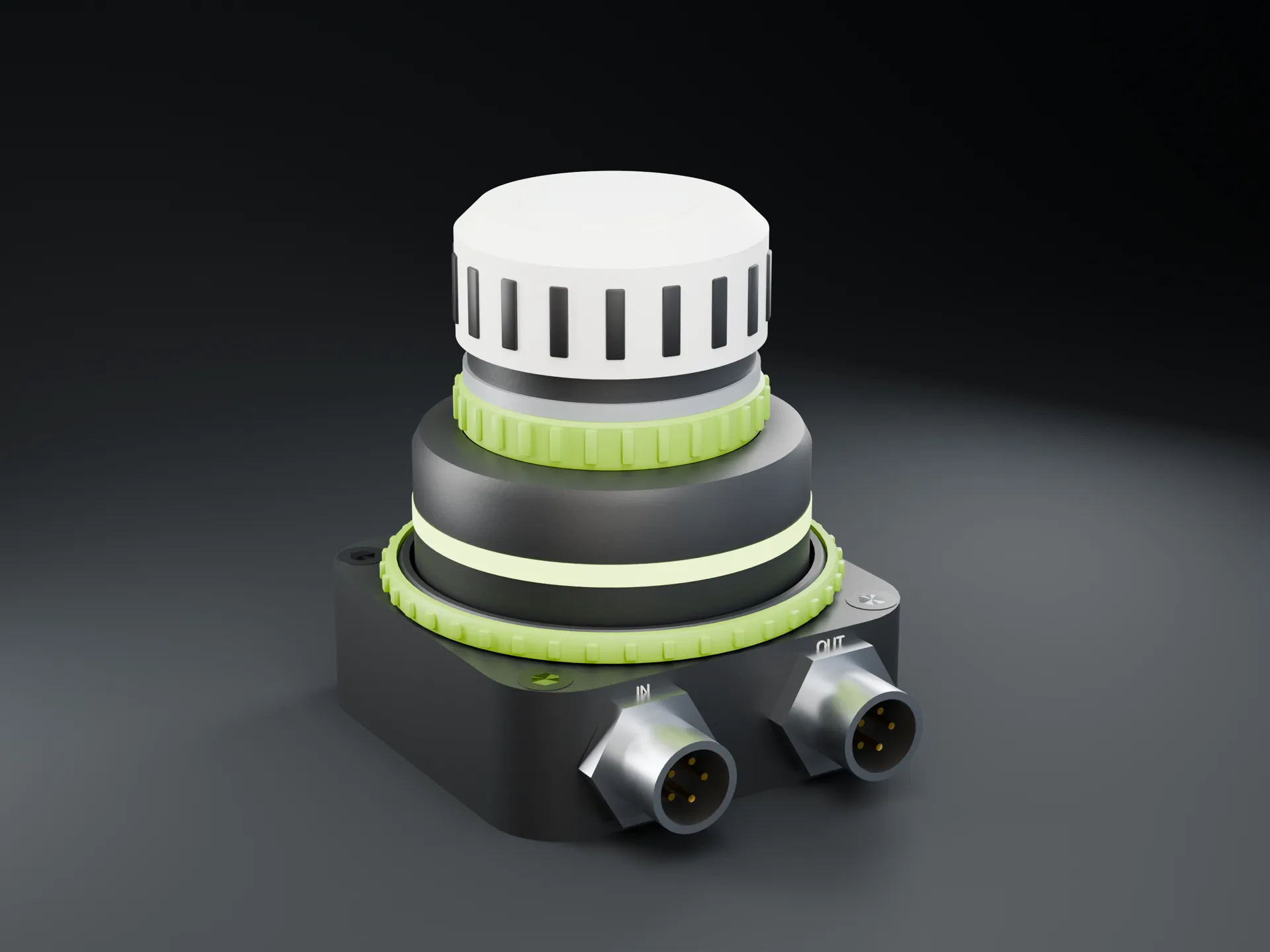
The CO2 head is for control and for the record. If you enrich a tent, the Air Guard room monitor is the safety device, and it stays a separate thing with its own alarm.
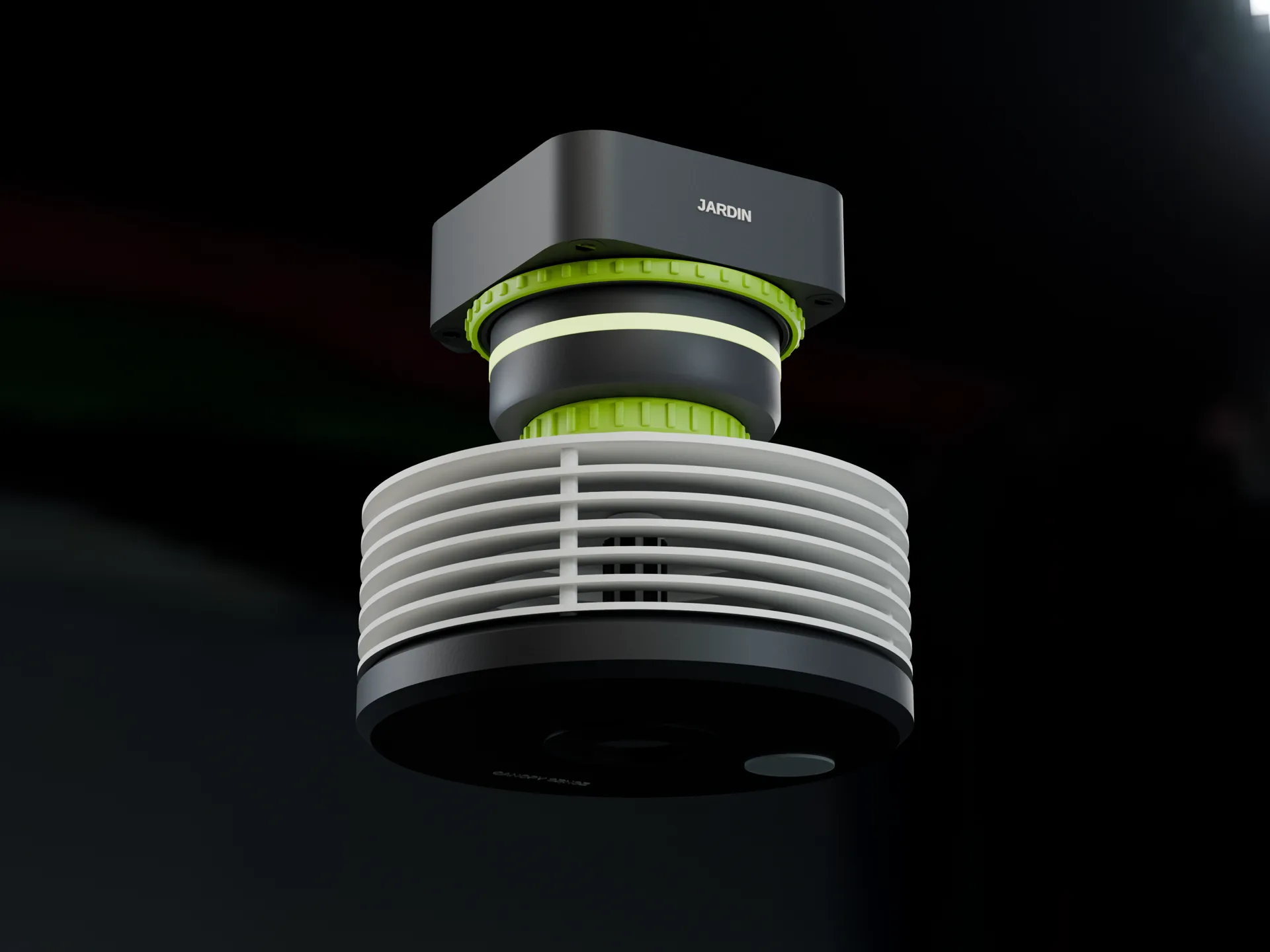
The canopy sensor that WaterWorks already hangs over the plants becomes one more head: the same body, on the same brain and dock as everything else.
Every render whole, at its own shape. Concept art from the design files, not product photos.
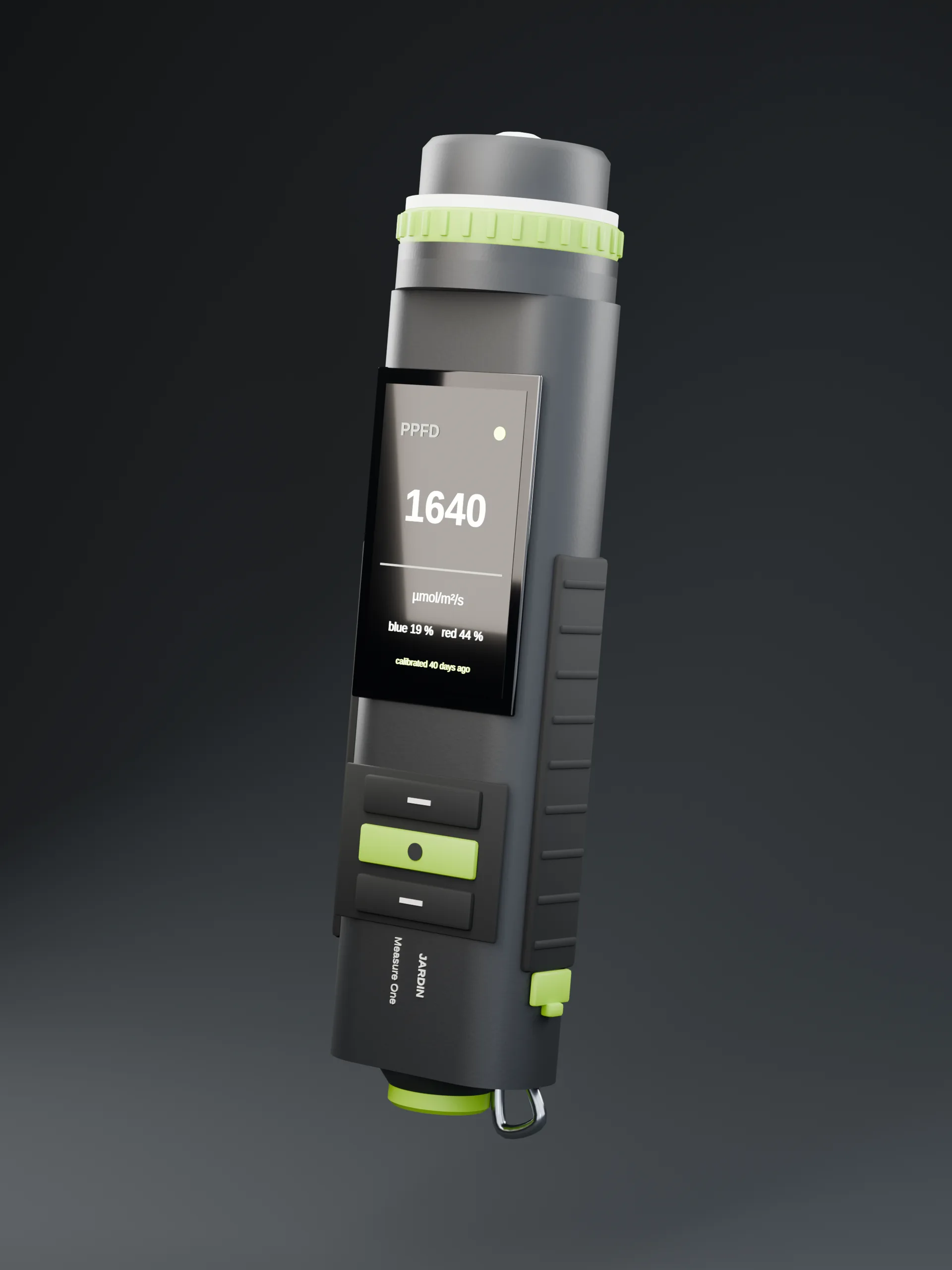
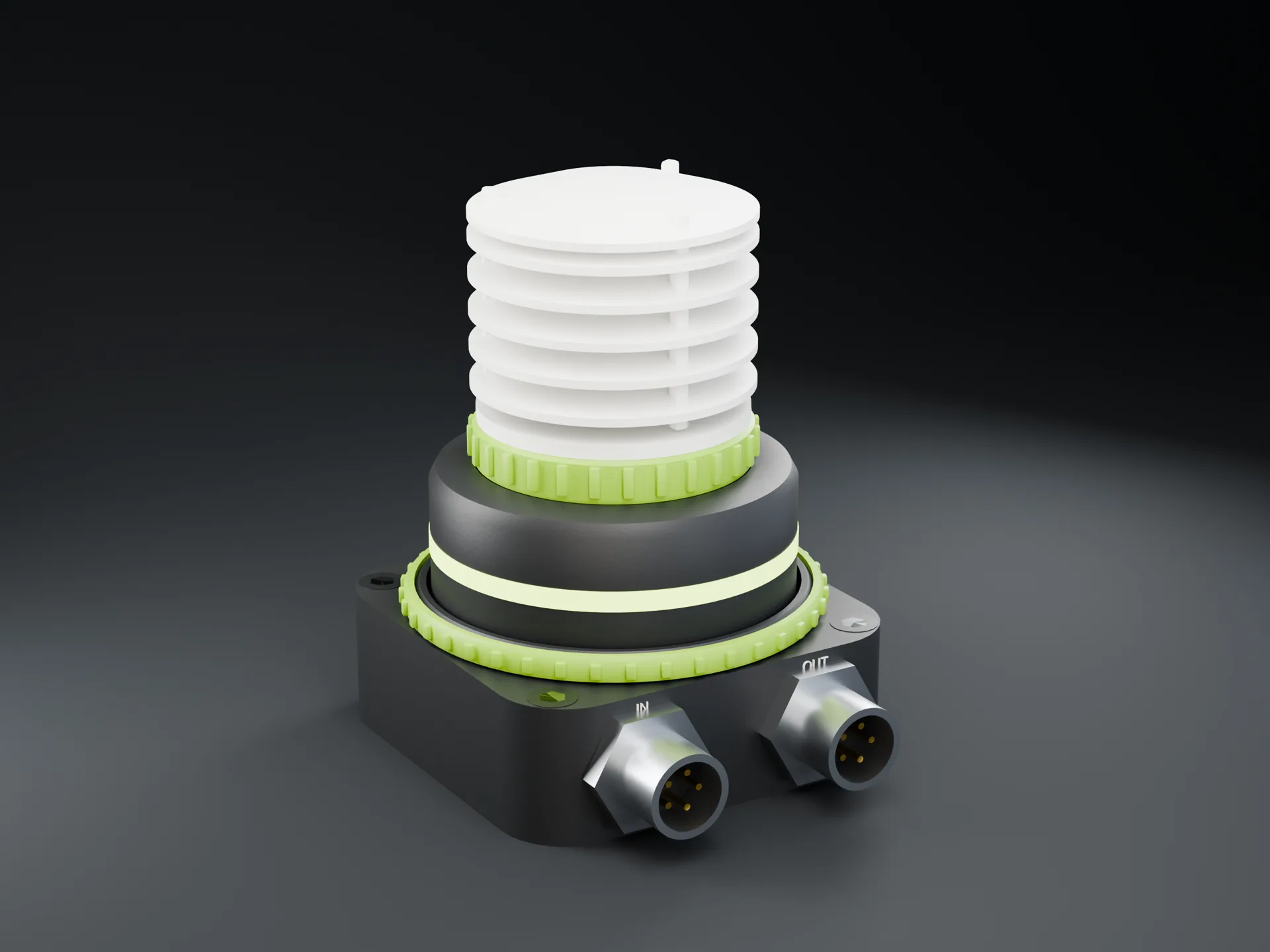
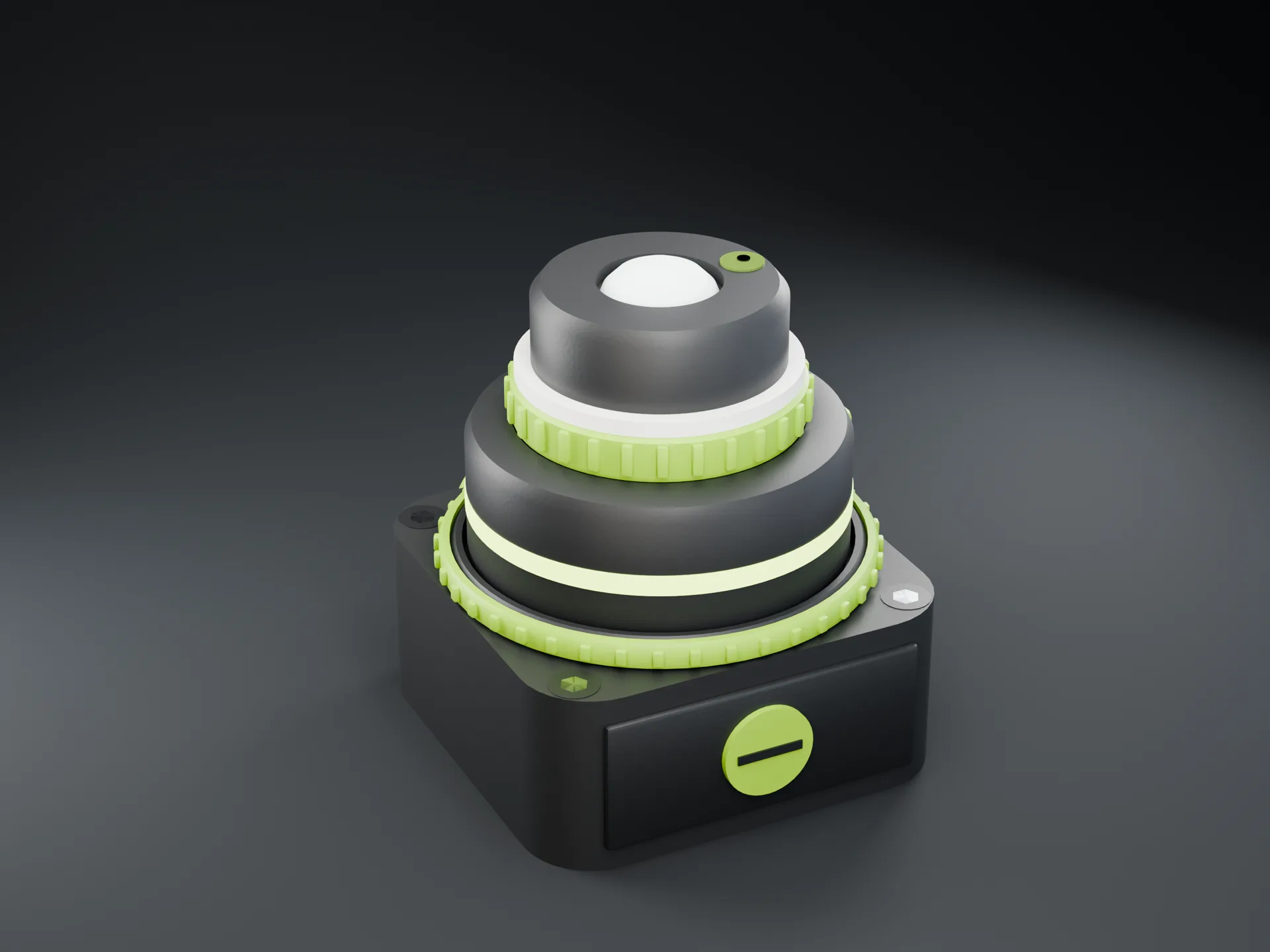
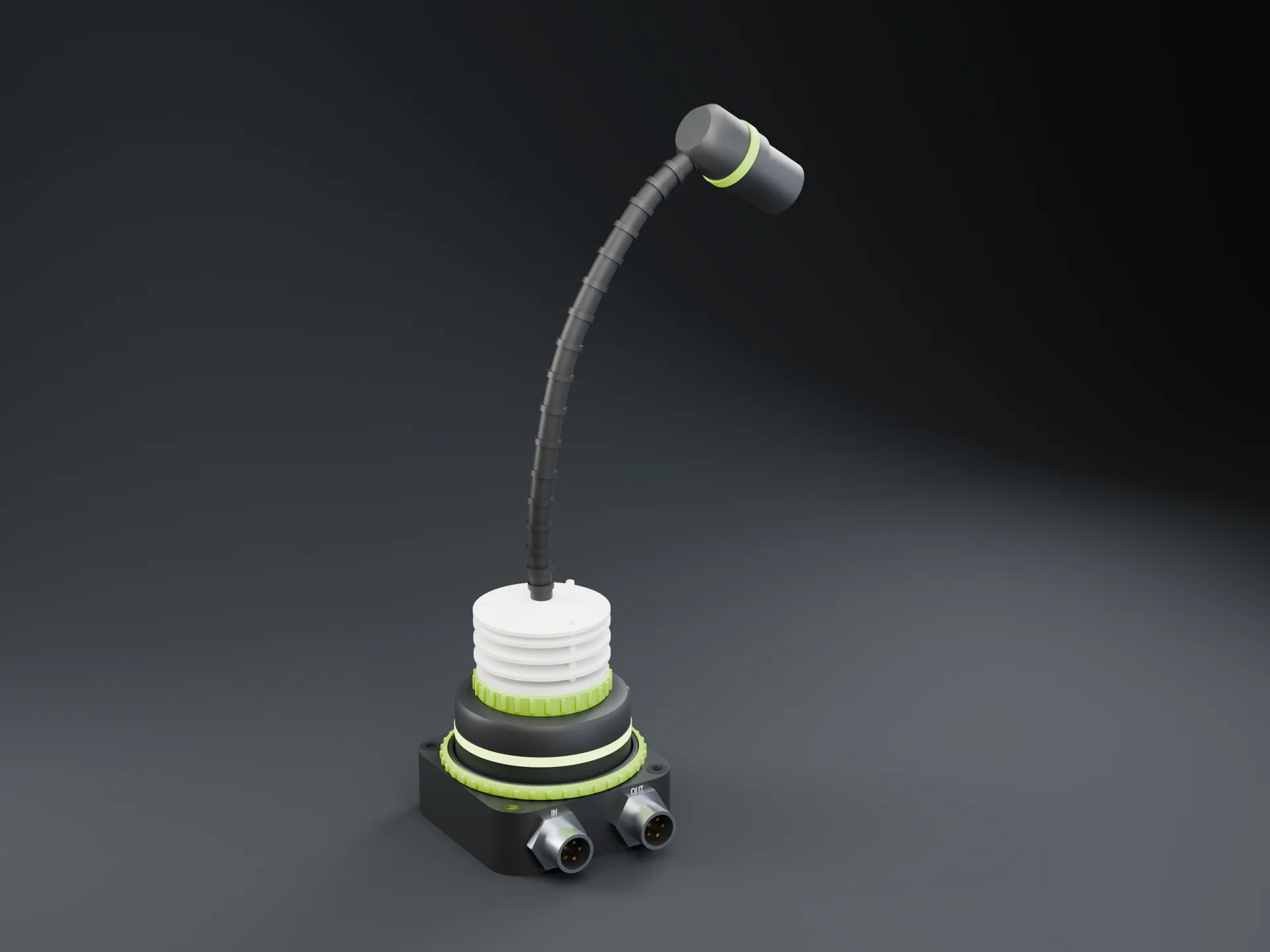
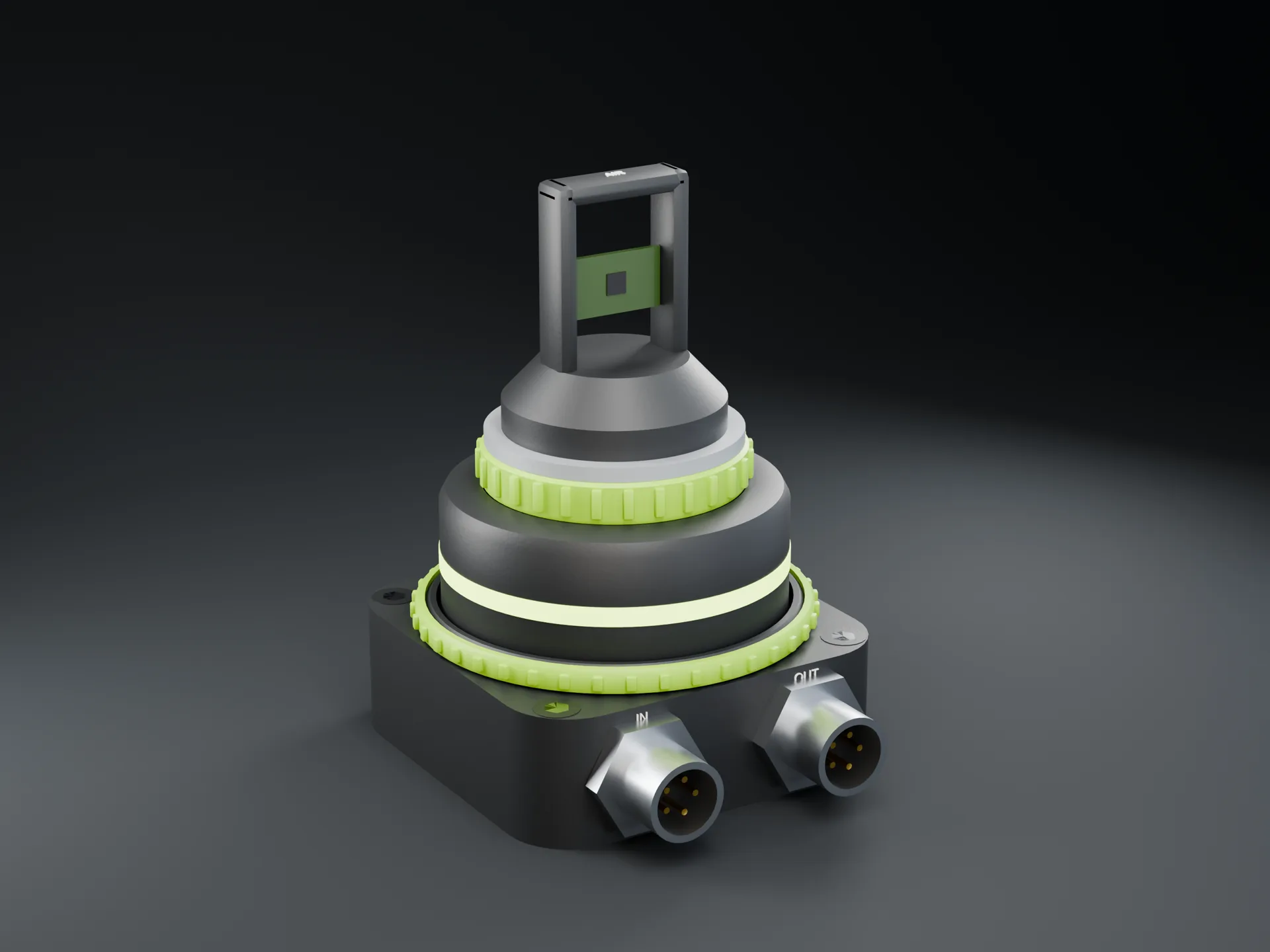
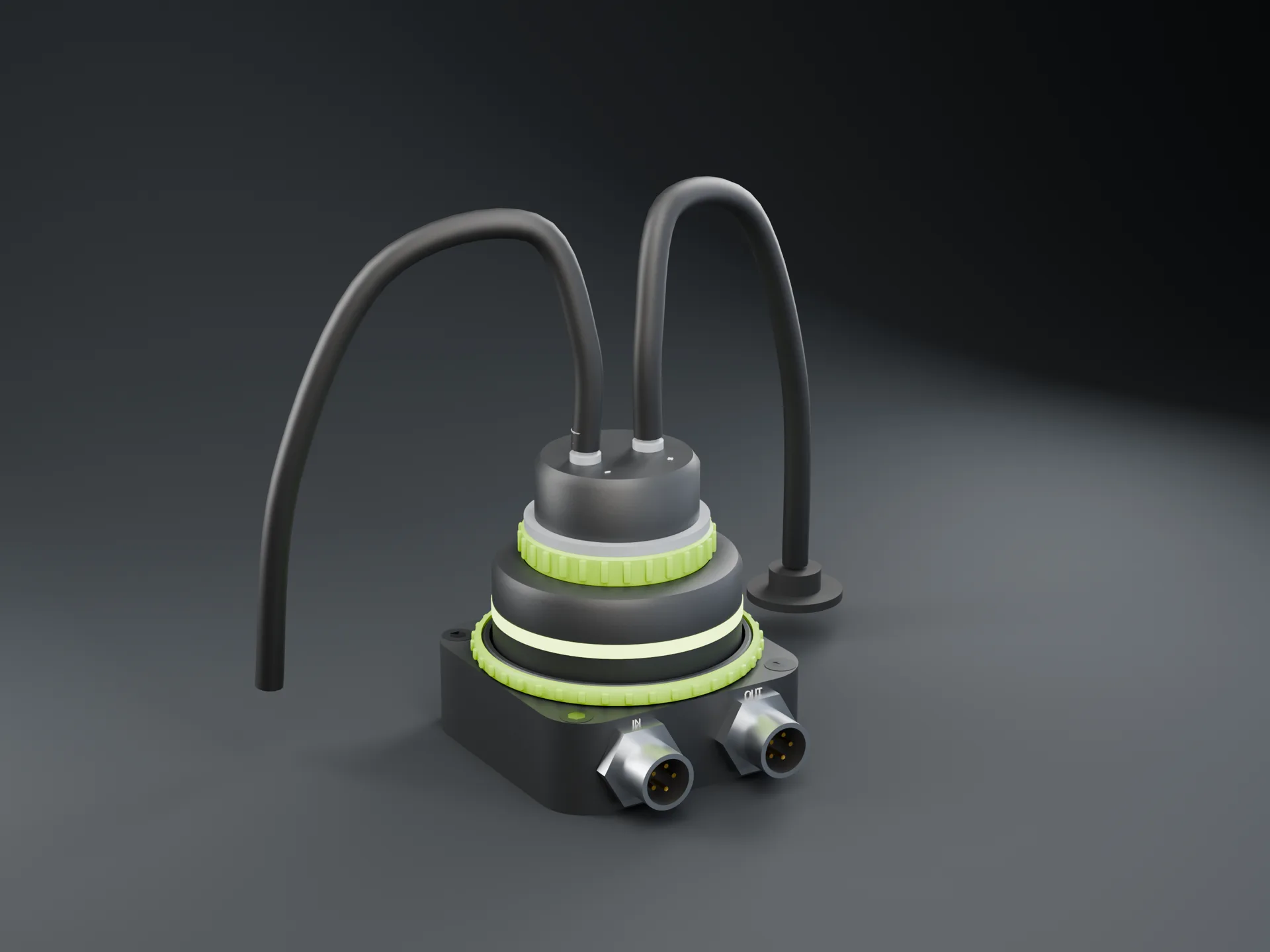
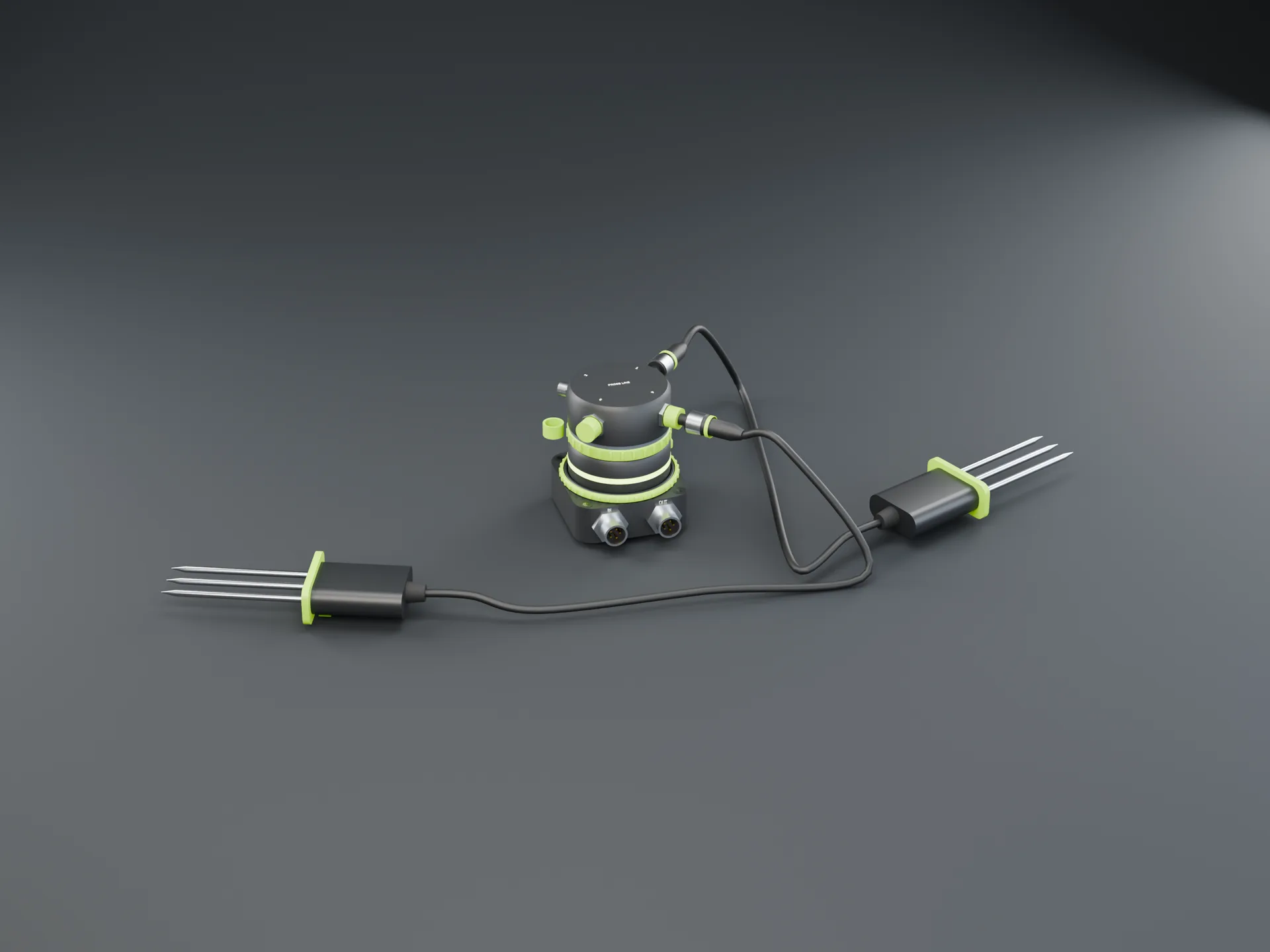
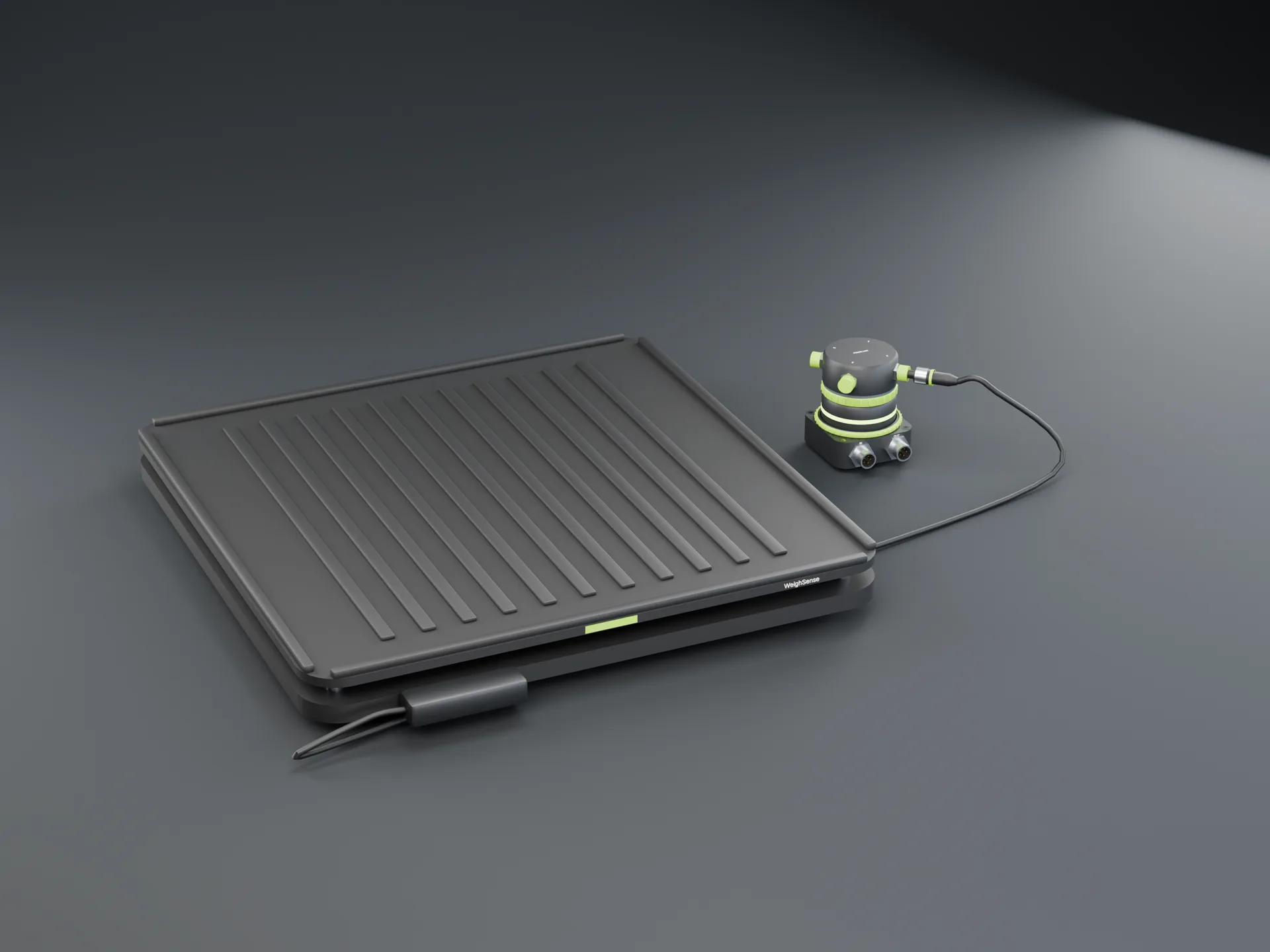
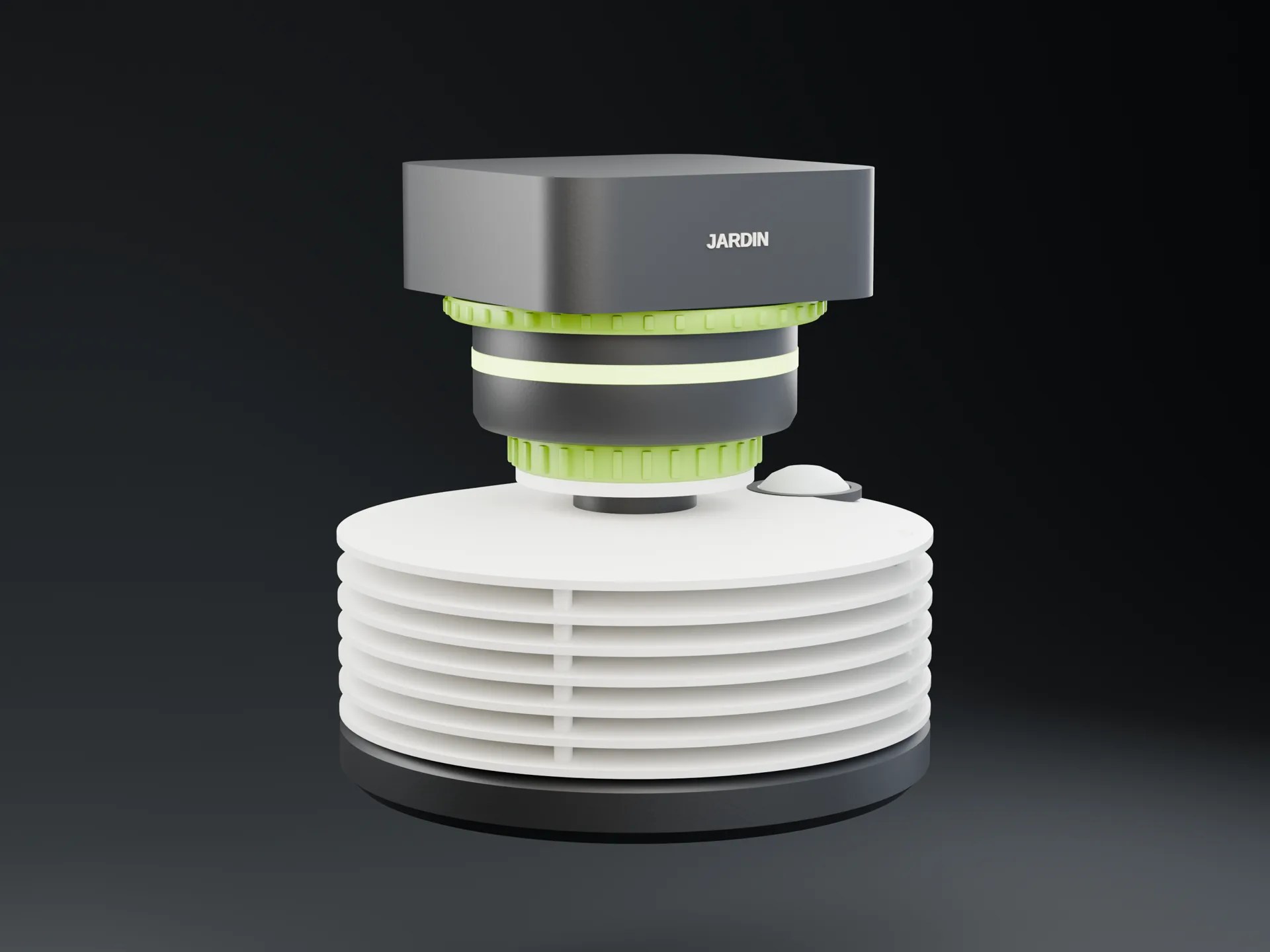
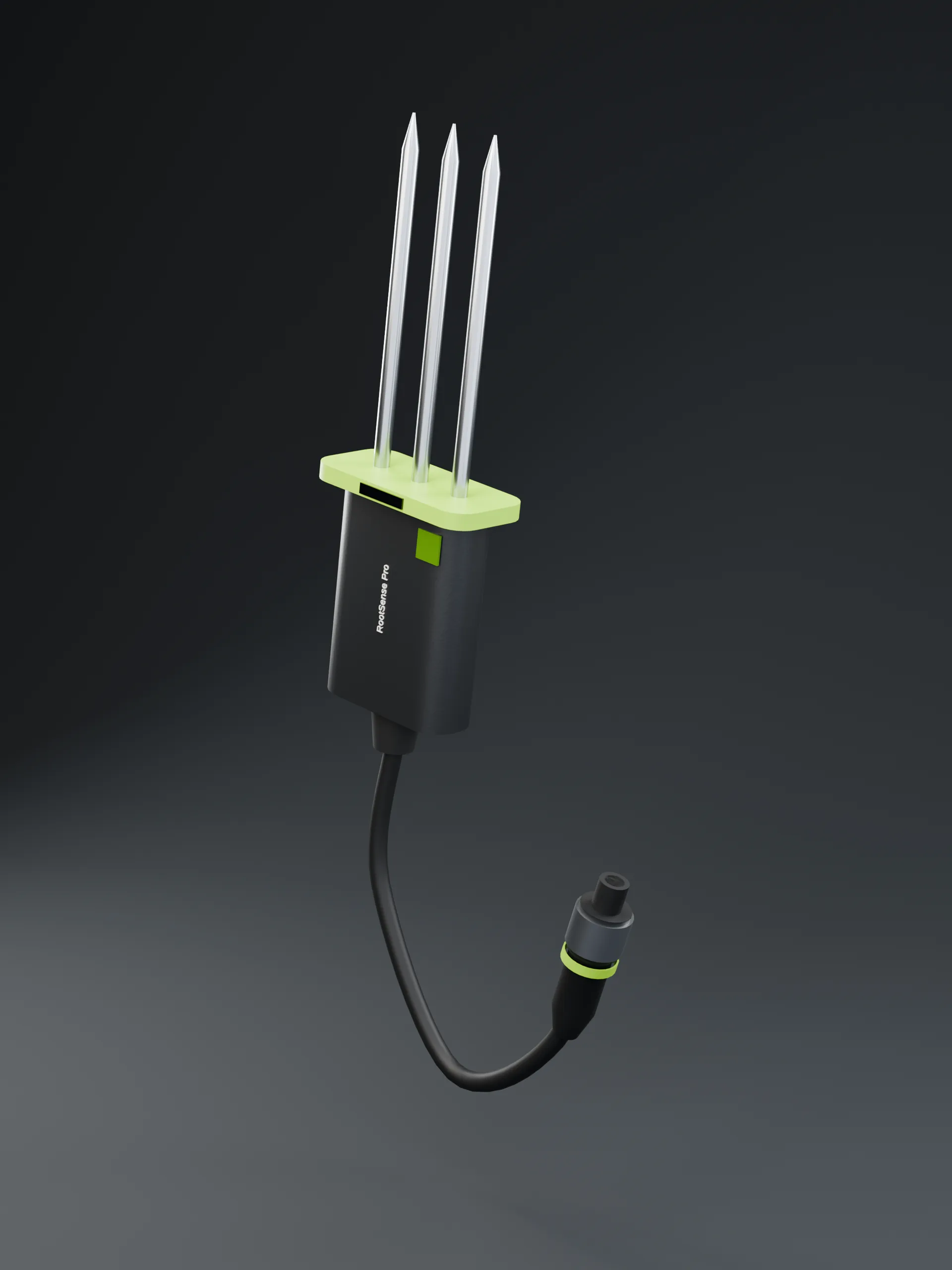
Each accuracy below is the target the design is built to reach, and the last column is how you would check it yourself at home. None has been measured on a built unit yet.
| Measures | Range | Accuracy target | How you check it |
|---|---|---|---|
| Air temperature | -10 to 60 °C | ±0.2 °C, 10 to 40 °C | Two Pucks side by side agree within 0.3 °C |
| Relative humidity | 0 to 100 %RH | ±2 %RH, 20 to 80 %RH | 75 %RH salt pouch (sodium chloride), 12 h |
| CO2 | 400 to 5,000 ppm | ±(50 ppm + 5 % of reading), 400 to 2,000 ppm (the sensor maker states ±(50 ppm + 3 %)) | Outdoor air reads 420 ppm ± 50 ppm |
| PPFD, 400 to 700 nm | 0 to 3,000 µmol/m²/s | ±5 % against a reference quantum sensor under the four reference spectra; cosine error under 5 % at 60 degrees | Two Light heads under the same light agree within 4 % |
| Leaf temperature (infrared) | 0 to 60 °C | ±0.5 °C at 15 to 30 cm, emissivity 0.97 | Aimed at a matt black card at room temperature it matches air temperature within 0.5 °C |
| Air speed | 0 to 7 m/s | ±0.4 m/s (5 % of full scale): for comparing places and finding dead air, not for absolute slow speeds | Capped head reads under 0.4 m/s |
| Differential pressure | -125 to 125 Pa | ±(0.1 Pa + 3 % of reading) | Ports joined read 0.0 Pa ± 0.1 |
| pH | 0 to 14 pH | ±0.02 pH after a two-point calibration, 15 to 30 °C | PH 7.00 pouch reads 7.00 ± 0.05; slope 90 to 105 % |
| Electrical conductivity at 25 °C | 0 to 10 mS/cm | ±2 % of reading, 0.2 to 5 mS/cm | 1.413 mS/cm pouch reads within 2 % |
| Volumetric water content | 0 to 100 % by volume | ±3 % by volume with the profile for the medium; ±1.5 % by volume after the grower's own two-point calibration | Probe in air reads 0; in water reads the probe's water figure ± 2 % |
| Bulk EC of the medium | 0 to 10 mS/cm | ±(5 % of reading + 0.02 mS/cm) | 1.413 mS/cm pouch |
| Weight | 0 to 80,000 g | ±0.05 % of full scale; drift under 0.02 % of full scale per 10 °C | A 1,000 g reference reads 1,000 g ± 5 g |
Reserve on Fund the Bay with a refundable deposit, or join the waitlist to hear when the first development kits are built and tested.